Pal-GHK and Matrixyl Get Explained the Same Way. The Structure Says Only One Earns It.
Pal-GHK's mechanism is usually explained by borrowing Matrixyl's story. The two molecules fold completely differently in solution, and that matters.
Shop by category
Growth Hormone Axis ResearchRegeneration ResearchPeptide BioregulatorsCognitive & Neuropeptide ResearchMetabolic & Cellular ResearchGLP-1 & Incretin ResearchMelanocortin & Endocrine ResearchDermal Peptide ResearchImmune & Thymic ResearchPeptide BlendsLab SuppliesResearch & info
Research HubReference LibraryEducationCompareBlogCOAsWhy UsFAQCalculatorGlossary
Cosmetic peptides for in-vitro skin biology research: signal peptides such as Matrixyl and Pal-GHK, plus SNAP-8 and GHK-Cu.
>99%
>99%
>99%
>99%About this category
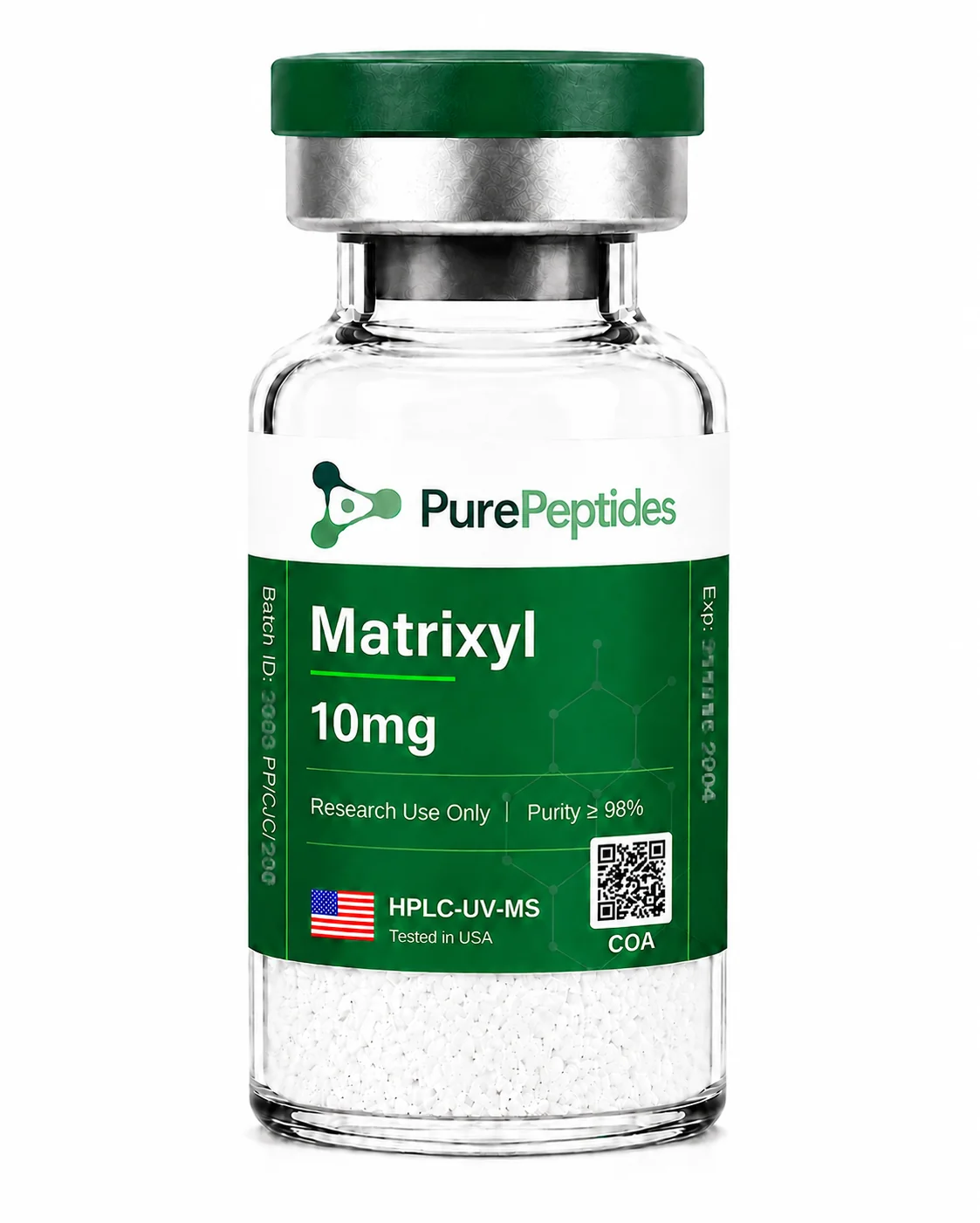
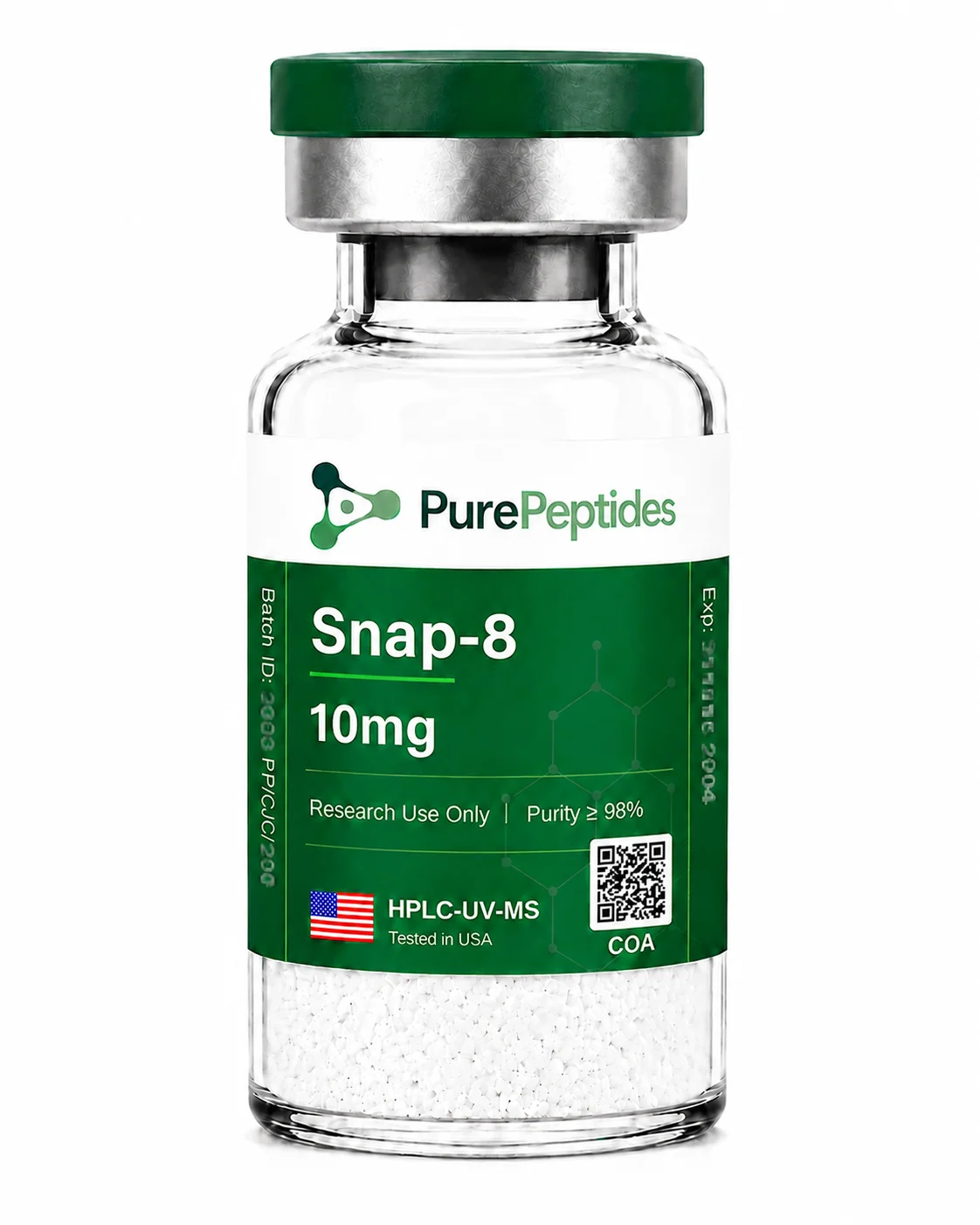
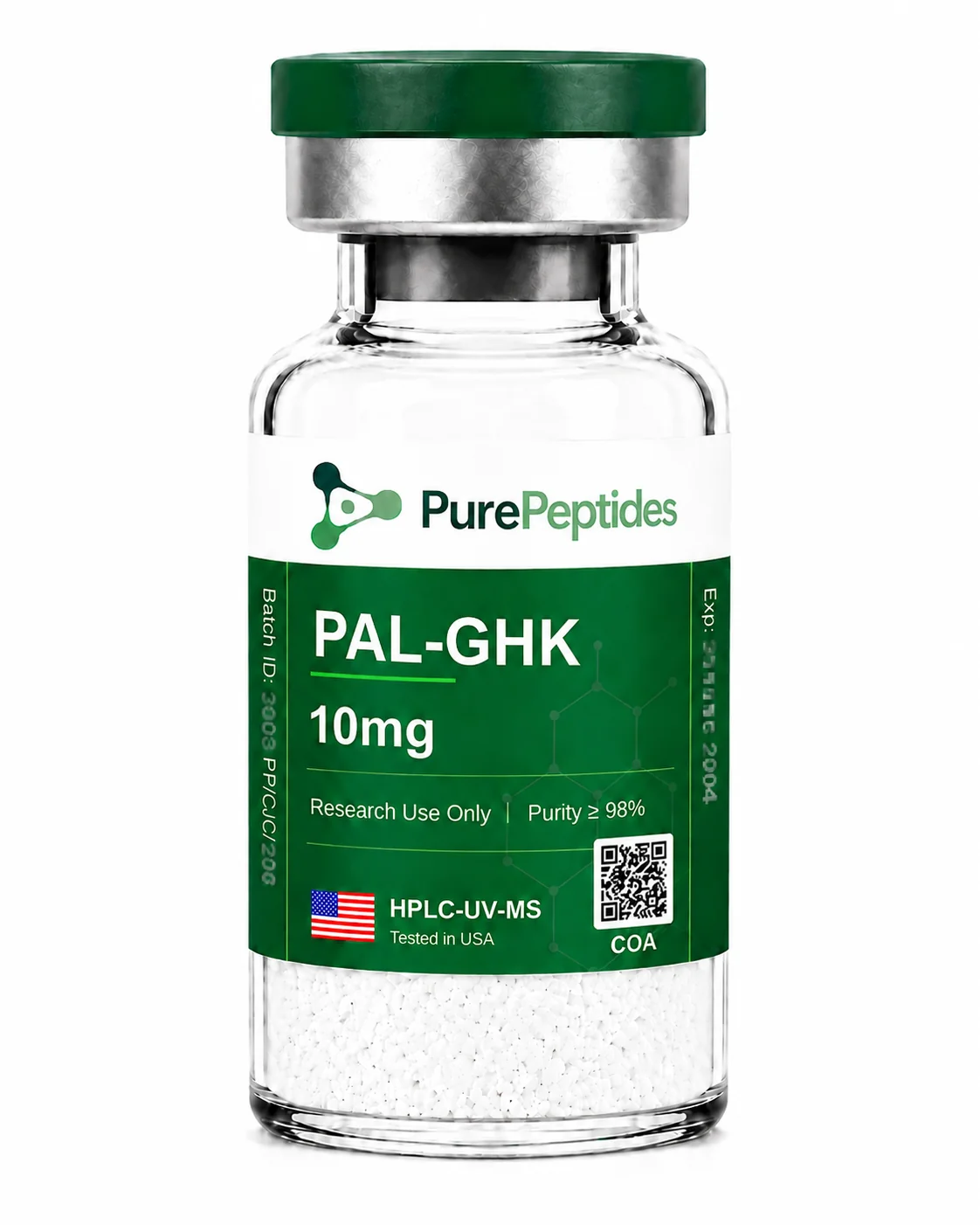
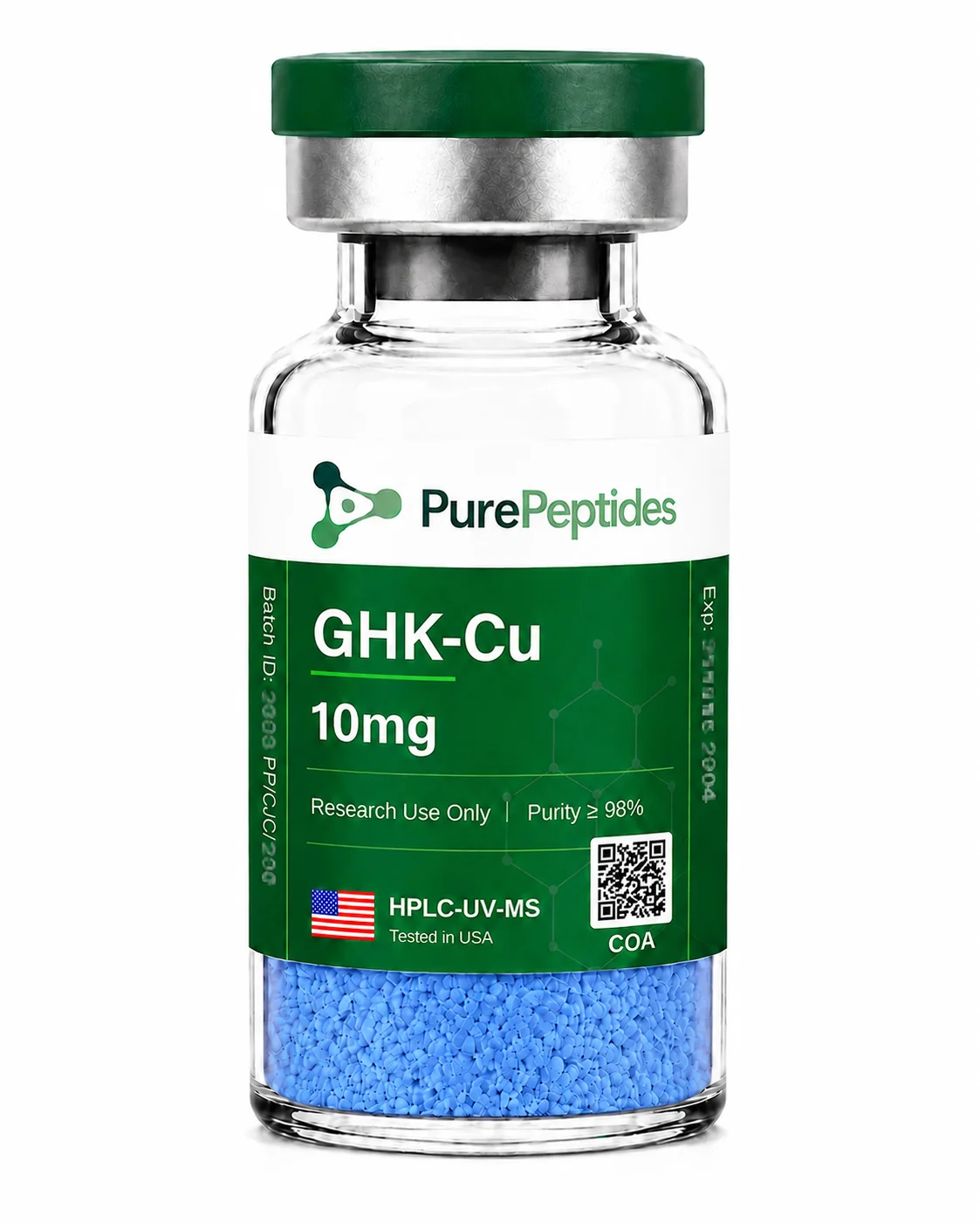
Compounds in this category are studied at the level of dermal fibroblasts and the extracellular matrix, covering collagen synthesis, matrix turnover, and barrier function. Matrixyl (Pal-KTTKS, INCI palmitoyl pentapeptide-4) is built around KTTKS, a five-amino-acid fragment of type I procollagen that fibroblasts recognize as a breakdown signal — its palmitoylated form is researched for prompting increased collagen I, III, and fibronectin production in culture. Pal-GHK pairs the copper-binding GHK tripeptide with a fatty acid tail for improved membrane penetration, and is studied for matrix remodeling and copper-dependent wound-repair pathways. SNAP-8, a fragment of the SNAP-25 protein involved in neurotransmitter vesicle docking, is researched for its effect on acetylcholine release at the neuromuscular junction, a mechanism of interest for expression-line studies at the dermal level.
Research and reference
An evidence review and a handling reference for each compound, kept off the product pages so neither is cut short.
Family overviewDermal Peptides Research
From the blog

Pal-GHK's mechanism is usually explained by borrowing Matrixyl's story. The two molecules fold completely differently in solution, and that matters.

The sequence behind Matrixyl was identified in 1993 by researchers studying how collagen is built, years before anyone turned it into a skincare product.

The 1973 paper that introduced GHK had nothing to do with skin, or with copper. How a tripeptide from blood took fifteen years to become a matrix molecule.

A convincing blue color is easy to fake. Here's the plain-English version of the two checks that actually prove GHK-Cu's copper is real.
Research areas
For in-vitro research use only. Not for human or veterinary use.

Research use only: not for human or veterinary use. You must be 21 or over to enter.
10% off your first order
New customers · applied automatically at checkout
By entering you agree to our Terms, Research Use Only policy and Privacy Policy.
Already have an account?
You're on the list
We'll email you when there's something worth knowing about.