
Buy Peptides, Independently Verified. Shipped from the US.
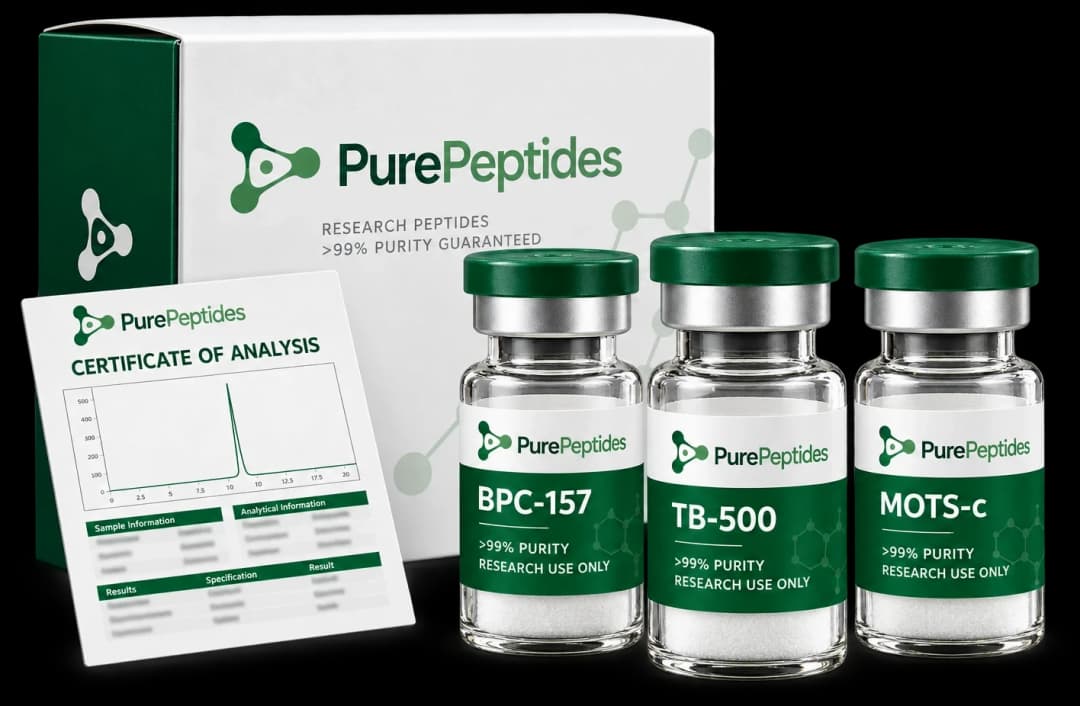
Pure Peptides supplies US researchers with independently tested, high purity research peptides. Every peptide is third-party HPLC verified and ships from our US warehouse the same business day when ordered before 12pm EST. A batch-specific Certificate of Analysis is viewable and downloadable on the product page.
Third-Party Tested
Independent HPLC and mass spec
>99% Purity
Verified on every batch
Same-Day Dispatch
Order before 12pm EST
COA Available
Full batch traceability
USA
Trusted US Supplier
75+
Research-grade compounds
>99%
Minimum purity guarantee
100%
Third-party COA verified
Shop by research area
Browse Peptides by Category
Not sure where to start? Every compound is grouped by the pathway it is studied in.
 13 compounds
Growth Hormone Axis Research
Peptides targeting the somatotropic axis: GHRHs, GHRPs, and IGF-1 analogs for growth hormone pathway research.
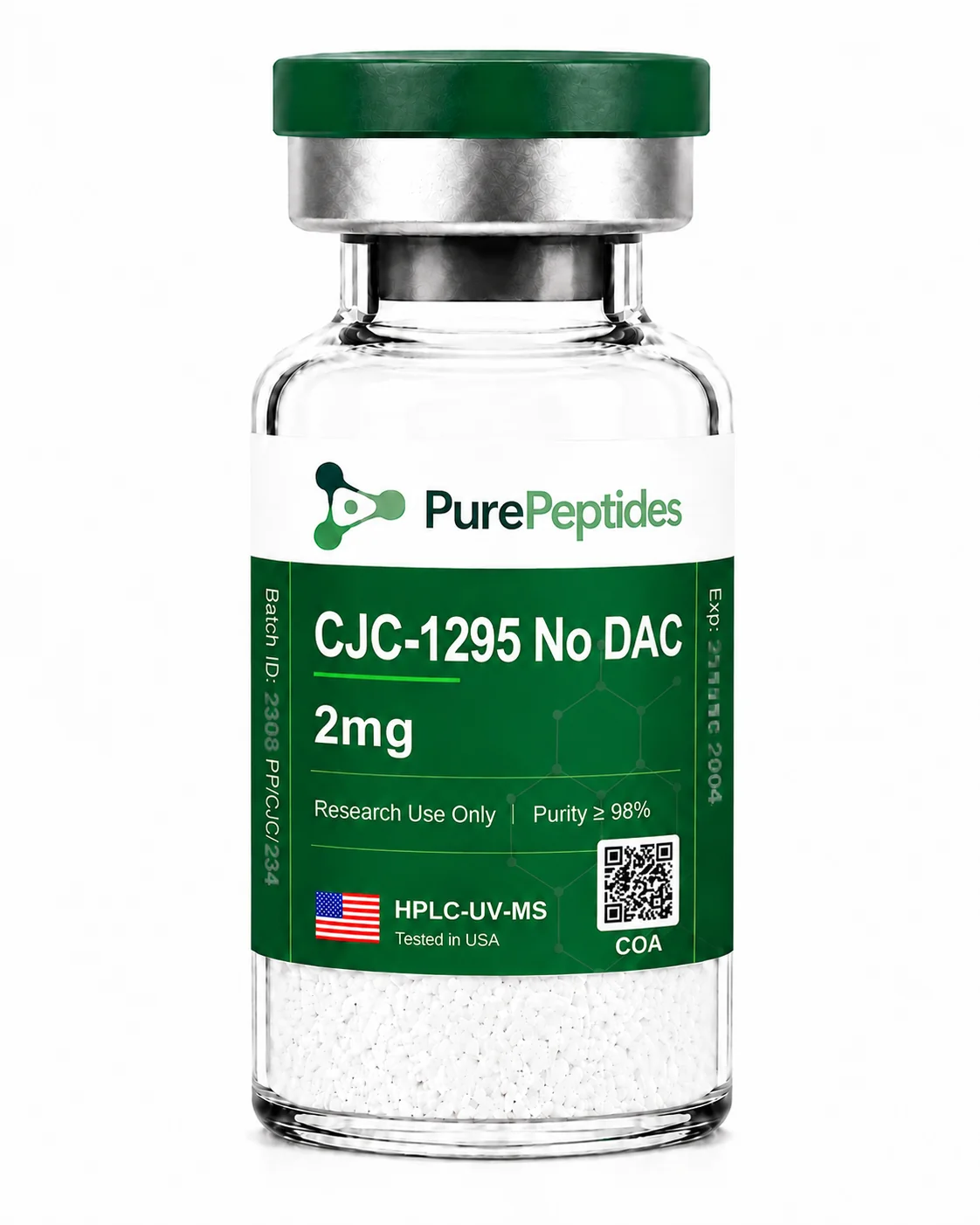
- CJC-1295 (No DAC)
- CJC-1295 With DAC
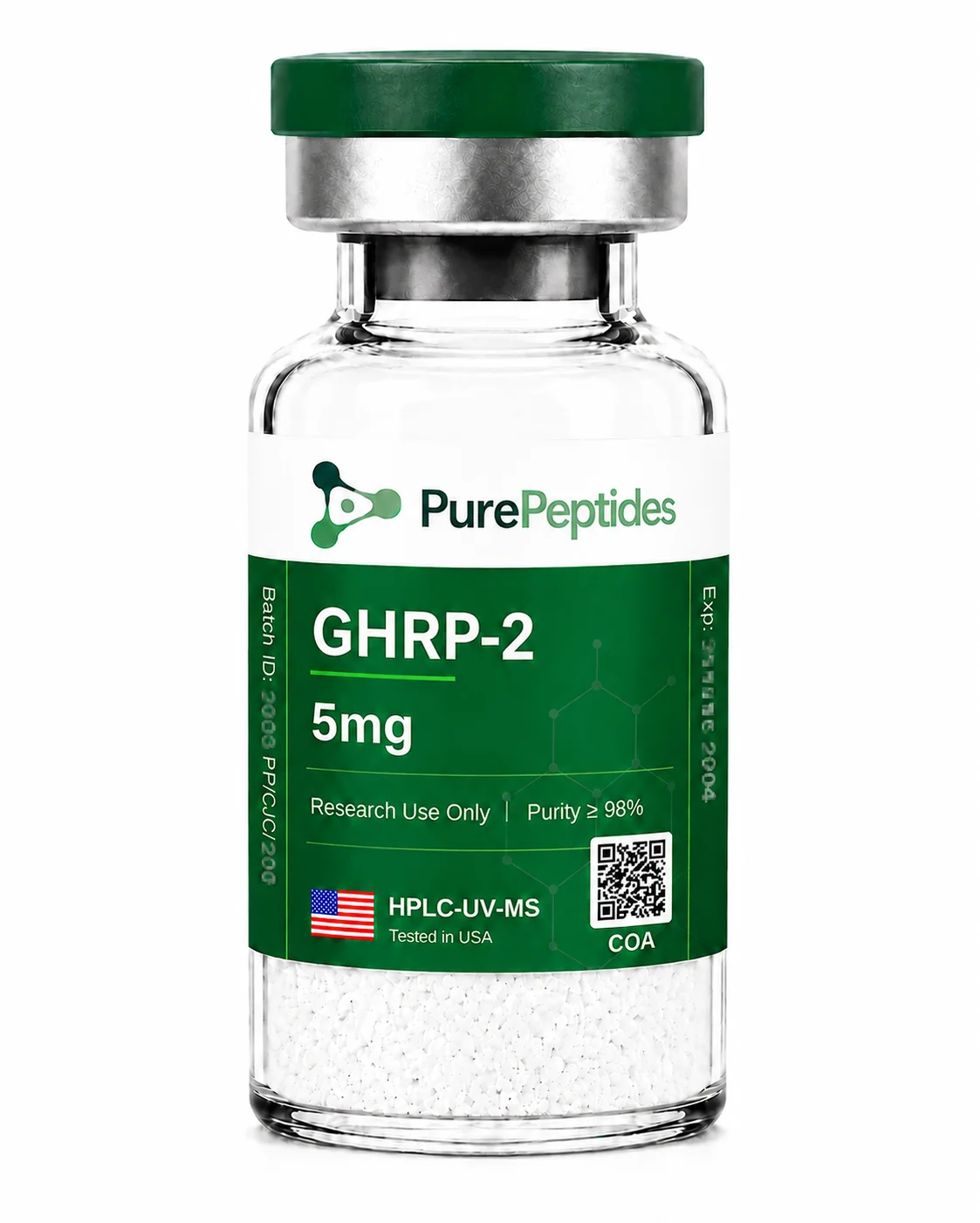
- GHRP-2
- GHRP-6
- Hexarelin
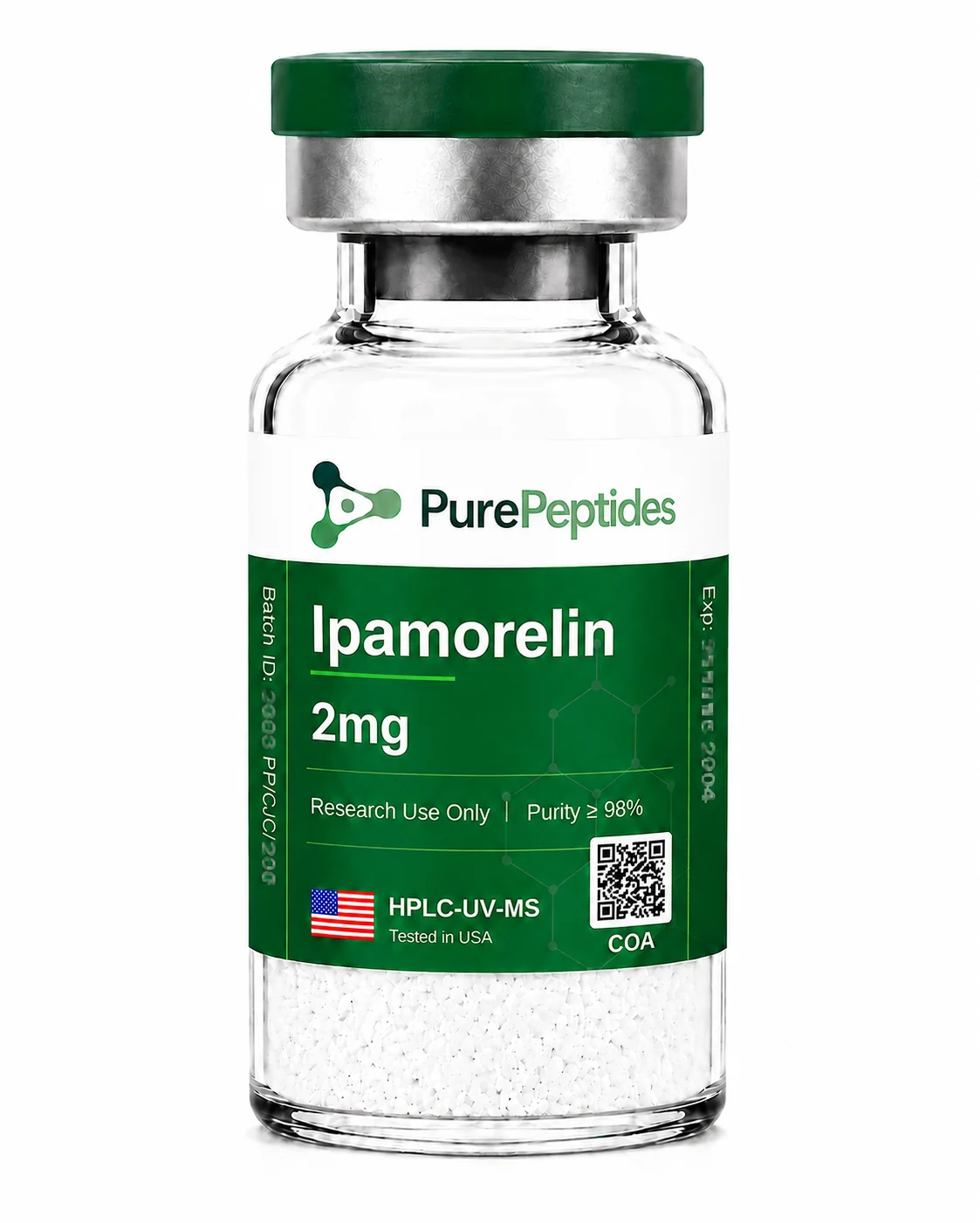
- Ipamorelin
- Sermorelin
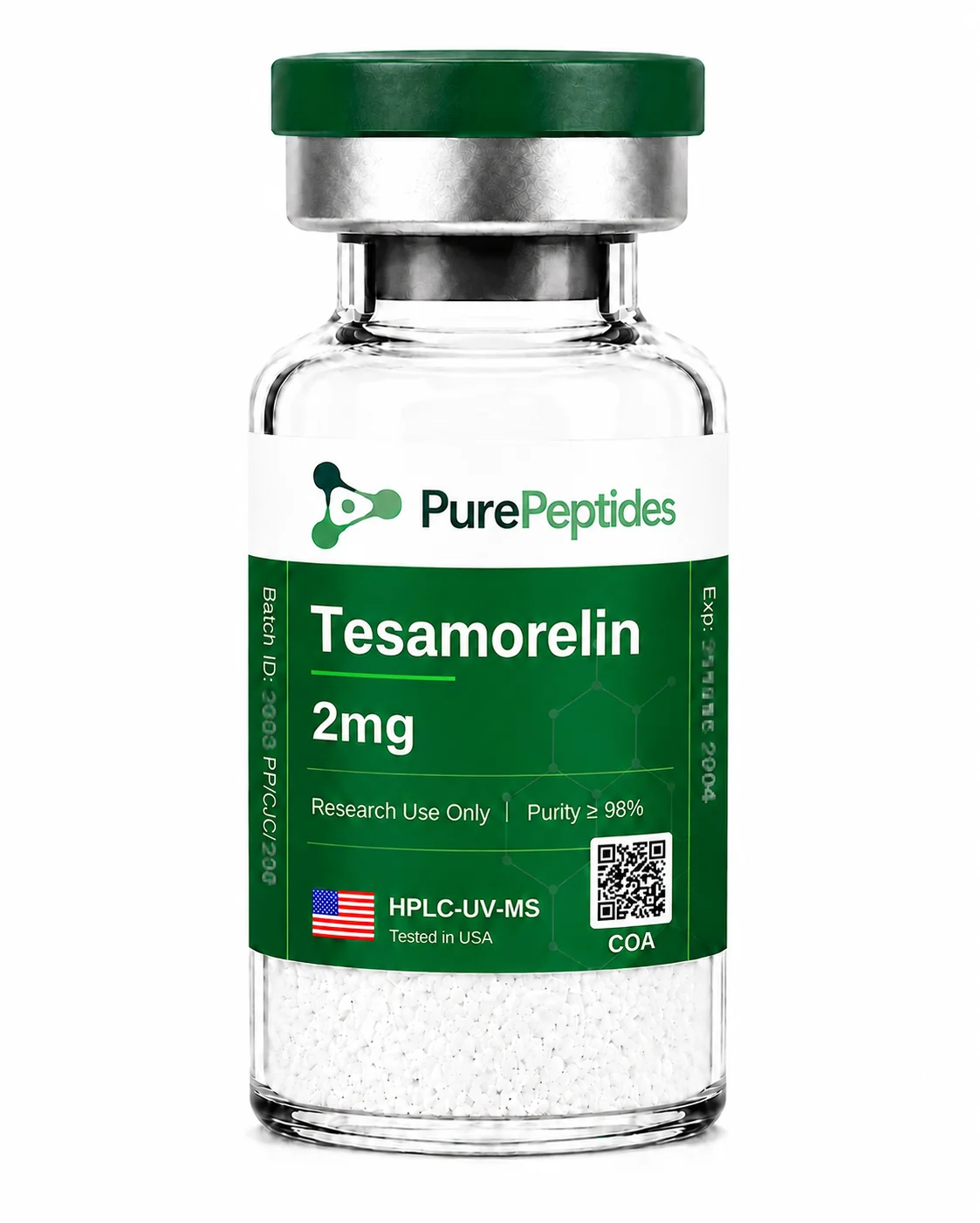
- Tesamorelin
- Fragment 176-191
- IGF-1 DES
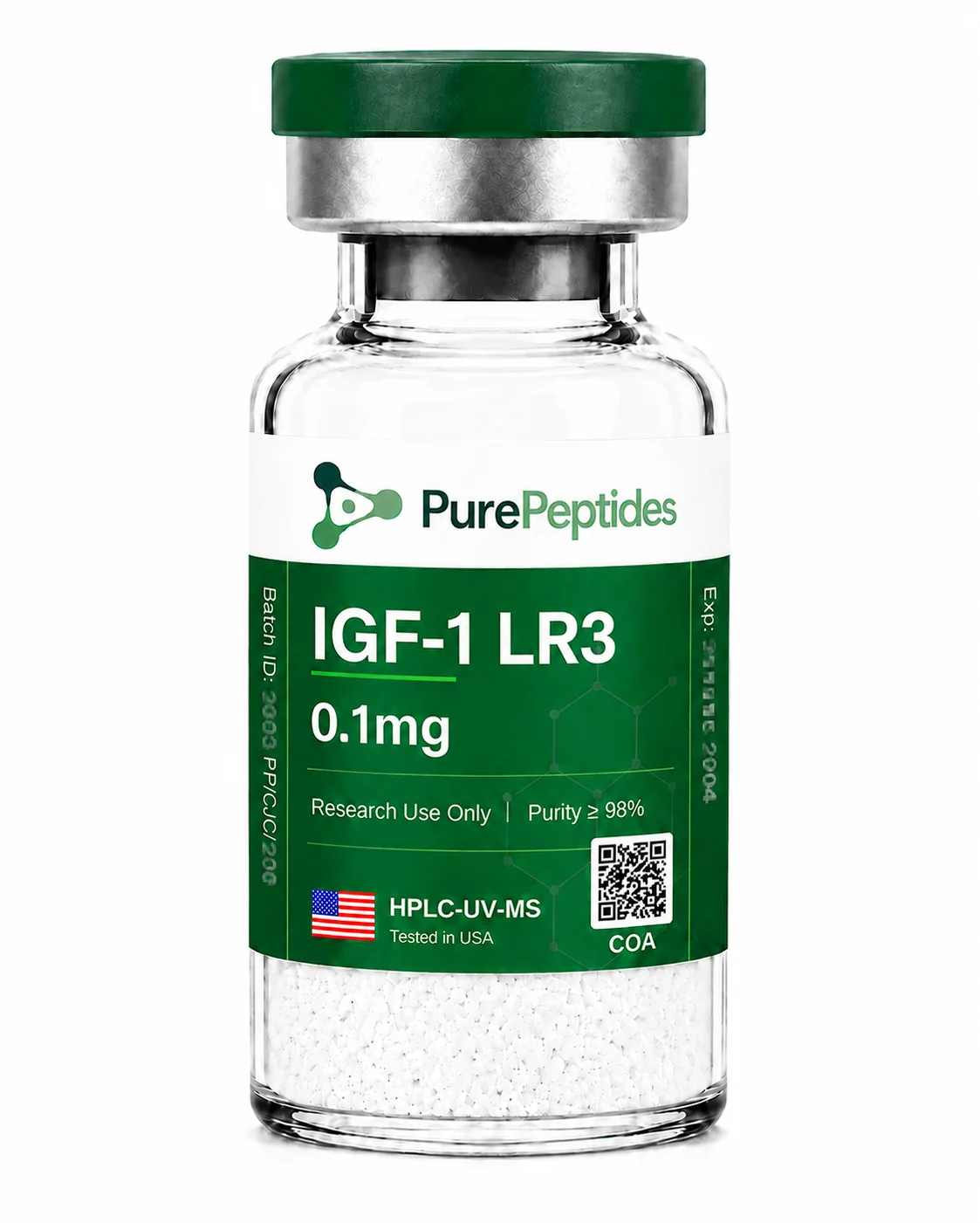
- IGF-1 LR3
- MGF (Mechano Growth Factor)
- PEG-MGF
 8 compounds
Regeneration Research
Research peptides for tissue and cellular repair: BPC-157, TB-500, GHK-Cu, LL-37, and related compounds.
Shop all 8 17 compounds
Peptide Bioregulators
Short-chain regulatory peptides including the Khavinson bioregulator series of organ-specific oligopeptides, alongside related immunomodulatory peptides for research use.
- Epithalon
- N-Acetyl Epitalon
- Bronchogen
- Cardiogen
- Cartalax
- Cortagen
- Crystagen
- Livagen
- Ovagen
- Pancragen
- Pinealon
- Prostamax
- Testagen
- Thymalin
- Vesilute
- Vesugen
- Vilon
 13 compounds
Cognitive & Neuropeptide Research
Nootropic and neuropeptide compounds for cognitive and neurological pathway research, including Semax, Selank, and Dihexa.
- Semax
- Selank
- Dihexa
- P21 (P021)
- DNSP-11
- PE-22-28
- ADAMAX
- Cerebrolysin
- Colivelin
- Humanin
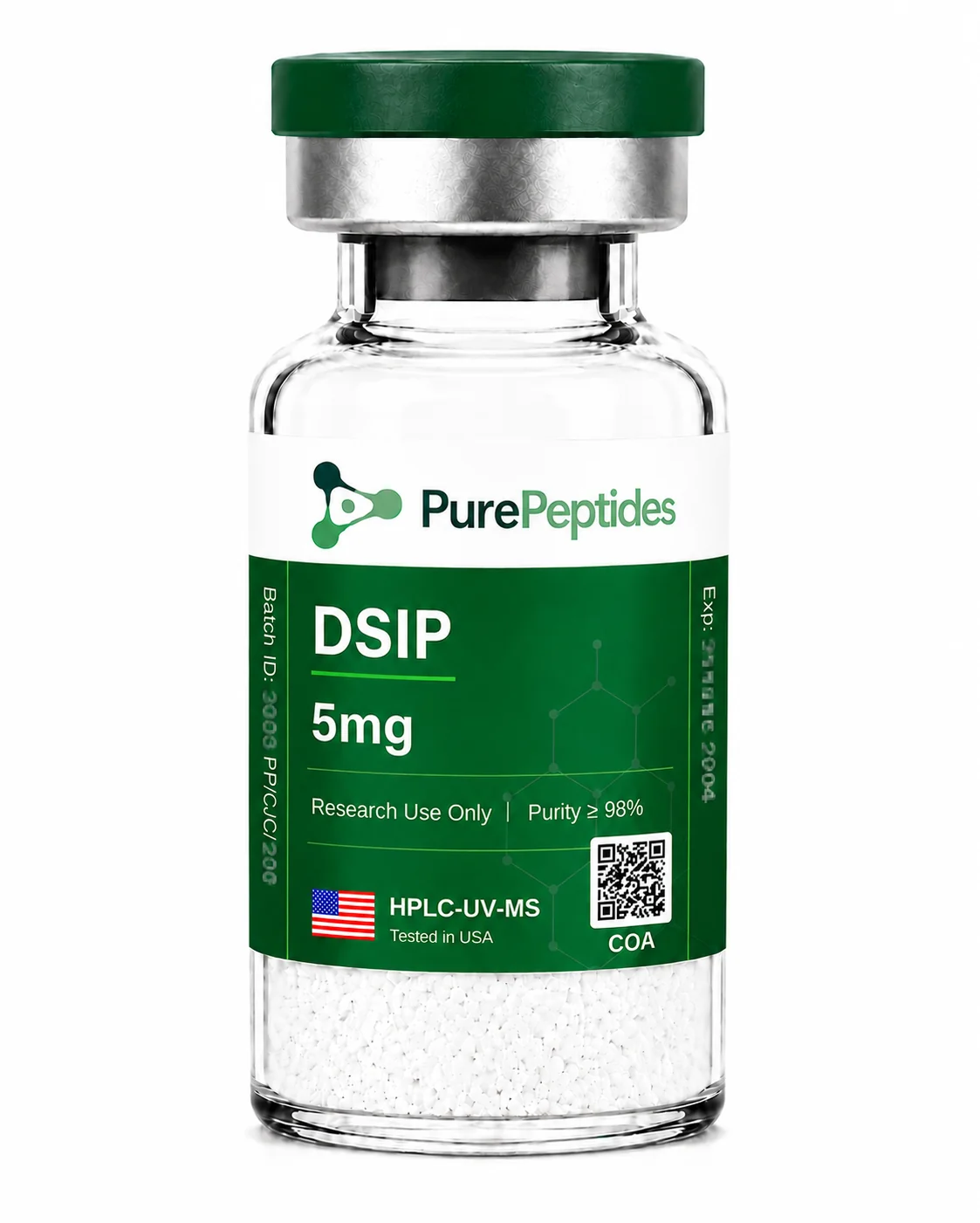
- DSIP (Delta Sleep-Inducing Peptide)
- Orexin A
- Orexin B
 12 compounds
Metabolic & Cellular Research
Peptides and small molecules targeting metabolic pathways, mitochondrial function, and cellular regulation.
- AOD-9604
- Adipotide
- AICAR
- MOTS-c
- NAD+
- Peptide YY (PYY 3-36)
- ACE-031
- GDF-8 (Myostatin)
- Follistatin 344
- SS-31 (Elamipretide)
- FOXO4-DRI (Proxofim)
- PNC-27
 7 compounds
Melanocortin & Endocrine Research
Melanocortin receptor agonists and endocrine signaling peptides for receptor binding and hormonal pathway research.
- PT-141 (Bremelanotide)
- Kisspeptin-10
- Oxytocin
- ACTH 1-39
- VIP (Vasoactive Intestinal Peptide)
- PTD-DBM
- Melanotan II
 4 compounds
Dermal Peptide Research
Signal peptides for in-vitro dermal biology research, including Matrixyl, PAL-GHK, and SNAP-8.
Shop all 4 4 compounds
Immune & Thymic Research
Thymic and immune signalling peptides for in-vitro immunology research, including Thymosin Alpha-1, Thymulin, Thymagen, and HEP-1.
Shop all 4
Best sellers
Most Popular Peptides
Our best-selling research compounds, US-stocked and ready to ship the same business day
 >99%
 >99%
 >99%
 >99%
 >99%
 >99%
 >99%
 >99%
 >99%
 >99%
 >99%
 >99%
The Pure Peptides standard
Where to Buy Peptides.
Among US peptide companies, Pure Peptides stands out as a domestic research supplier researchers can trust. When researchers across the United States need to purchase peptides for in-vitro study, they need a supplier that delivers consistent purity, full documentation, and reliable stock without the delays of international shipping.
- >99% Purity GuaranteedEvery batch independently verified by a third-party accredited laboratory before dispatch.
- Cold-Chain ShippingThermal insulation and cold packs on every order, included at no extra charge.
- Batch-Specific COAsLot-level Certificates of Analysis, published and searchable by batch number. Not generic multi-batch documents.
- No In-House TestingWe do not test our own products. Third-party results only, removing the conflict of interest.
Read more about where to buy peptides
At Pure Peptides, we recognize that the validity of your research depends entirely on the precision of your compounds. That is why independent third-party testing is not optional for us. It is the foundation of everything we dispatch.
Every compound in our catalog, from BPC-157 and TB-500 to Semax and GHK-Cu, is independently tested by a third-party accredited laboratory before dispatch. A batch-specific Certificate of Analysis is available to view and download directly on the product page, confirming the purity, identity, and molecular weight of your compound.
We stock over 75 research-grade peptides with cold-chain packaging and full MSDS documentation on every order. Orders confirmed before 12pm EST are dispatched the same business day; orders confirmed after 12pm EST are dispatched the next business day. Whether purchasing for a single experiment or an ongoing multi-phase research program, our team is equipped to support you.
What to look for when purchasing peptides.
- Independent third-party testingA reputable US peptide supplier will provide HPLC results from an independent accredited laboratory, not in-house testing where the supplier has a financial interest in the result.
- Batch-specific COAGeneric certificates covering multiple batches are a red flag. Insist on lot-specific documentation matching your order.
- US-held stockUS-stocked peptides ship faster and are dispatched under domestic cold-chain handling requirements.
- Transparent pricingResearch budgets are finite. We publish clear pricing with no hidden fees. Bulk and custom-synthesis pricing available on request.
Free resources
The Research Library
Research summaries, chemistry and handling references, side-by-side comparisons and batch certificates of analysis, in one place.
Latest Research
Scientifically reviewed articles on our research compounds.
- GH Axis
Growth Hormone Secretagogues Research
Growth hormone secretagogues (GHS) are molecules studied for their ability to make the pituitary gland release growth hormone (GH). Research so far has found that these molecules can reach the same end point by different routes or pathways. This article compar
- Metabolic
Metabolic Peptides Research
NAD+, SS-31 and AICAR are all studied in relation to cellular energy metabolism and mitochondrial function, but they work in different ways. NAD+ is an essential coenzyme that several classes of enzyme depend on. SS-31 is a mitochondria-targeted peptide that a
- Dermal
Dermal Peptides Research
GHK-Cu, Matrixyl, PAL-GHK and Snap-8 all appear in dermal research, but they do not all act through the same biological pathway. This article discusses GHK-Cu, Matrixyl and PAL-GHK in relation to collagen and extracellular matrix (ECM) biology. Snap-8 is studi
- GH Axis
IGF-1 Family Research
The IGF-1 family includes several research compounds. Each one acts within the insulin-like growth factor 1 (IGF-1) signaling system, or is derived from it. Growth hormone secretagogues work upstream at the pituitary to raise growth hormone, but these compound
- Metabolic
Myostatin Pathway Research
The myostatin pathway is one of the clearest biological systems involved in limiting skeletal muscle growth. GDF-8, Follistatin and ACE-031 each act at a different point in this pathway: GDF-8 provides the inhibitory signal, and Follistatin binds and neutraliz
- Bioregulators
Vesilute Research
Vesilute is a trade name for the dipeptide Glu-Asp. The one indexed animal study found no difference from its amino acids on the three endpoints it measured.
More research
- Thymulin ResearchThymulin is a zinc-dependent thymic nonapeptide. Its human trials date from the 1980s, it is approved nowhere, and its newest evidence is preclinical.
- Thymosin Beta-4 ResearchThymosin beta-4 (timbetasin) is the 43-residue parent of TB-500, not the same molecule. Review of its Phase 3 record, nulls and conflicts.
- Thymagen ResearchThymagen, alpha-Glu-Trp, is in Russian-registered medicines. Its Kaposi's sarcoma Phase III found no benefit over placebo and shorter time to progression.
- Sermorelin ResearchSermorelin held two FDA approvals, both withdrawn in 2009. What the primary regulatory record and the small human trial base actually establish.
- PYY 3-36 ResearchPYY 3-36 research: human appetite infusion findings, a contested rodent replication record, dose-limiting nausea, and a Phase 2 trial that missed.
- PTD-DBM ResearchPTD-DBM is a CXXC5-blocking peptide studied in cells and mice for wound healing and hair regrowth. ClinicalTrials.gov lists no human trial of it.
- PEG-MGF ResearchPEG-MGF research reviewed: one PubMed record, no peer-reviewed human studies, no CAS, and an FDA compounding nomination withdrawn by its nominator.
- PE-22-28 ResearchA spadin-derived peptide designed to block TREK-1, PE-22-28 has three preclinical papers, no independent replication and no trial on ClinicalTrials.gov.
- P021 ResearchP021 research is sixteen years of animal and cell studies with no independent replication. No human trial has ever run. What the evidence shows and omits.
- Orexin-B ResearchOrexin-B research is small: 81 title-level papers against 868 for orexin-A, no human dosing study, and a mouse blood-brain barrier null.
- Orexin-A ResearchOrexin-A is mostly measured, not given: four small human intranasal studies, wakefulness nulls, and approved insomnia drugs that block its receptors.
- SNAP-8 ResearchA PubMed search for acetyl octapeptide-3 returns two papers, and neither tests it alone. ClinicalTrials.gov lists none. What the SNAP-8 record contains.
Chemistry & Handling References
Molecular identity, reconstitution, storage and verification, compound by compound.
- ACE-031 ReferenceWhat ACE-031 is chemically and how to handle it in the lab: fusion protein structure, reconstitution, storage, stability, and verification.
- 39resACTH 1-39 ReferenceWhat ACTH 1-39 is chemically and how to handle it in the lab: 39 residue polypeptide structure, reconstitution, storage, stability, and verification.
- 73atomsADAMAX ReferenceADAMAX, C50H69N11O11S, 1032.24 g/mol, purity greater than 99 percent. Capped heptapeptide profile, reconstitution chemistry, storage, HPLC and MS verification.
- 18atomsAICAR ReferenceWhat AICAR is chemically and how to handle it in the lab: nucleoside structure, reconstitution, storage, stability, and verification.
- 16resAOD-9604 ReferenceWhat AOD-9604 is chemically and how to handle it in the lab: disulfide cyclised peptide structure, reconstitution, storage, stability, and verification.
- 11resARA-290 ReferenceARA-290, CAS 1208243-50-8, 1257.32 g/mol, purity greater than 99 percent. Eleven-residue peptide profile, reconstitution chemistry, storage, HPLC and MS verification.
- 177atomsAdipotide ReferenceWhat Adipotide is chemically and how to handle it in the lab: chimeric peptidomimetic structure, reconstitution, storage, stability, and verification.
- 27resB7-33 ReferenceB7-33, CAS 1818415-56-3, C131H229N41O36S, purity greater than 99 percent. Peptide profile, reconstitution chemistry, storage, HPLC and MS verification.
- 15resBPC-157 ReferenceWhat BPC-157 is chemically and how to handle it in the lab: pentadecapeptide structure, reconstitution, storage, stability, and verification.
- 31atomsBronchogen ReferenceWhat Bronchogen is chemically and how to handle it in the lab: tetrapeptide structure, reconstitution, storage, stability, and verification.
- 29resCJC-1295 (No DAC) ReferenceWhat CJC-1295 (No DAC) is chemically and how to handle it in the lab: 29 residue peptide structure, reconstitution, storage, stability, and verification.
- 30resCJC-1295 with DAC ReferenceWhat CJC-1295 with DAC is chemically and how to handle it in the lab: 30 residue peptide structure, reconstitution, storage, stability, and verification.
- 34atomsCardiogen ReferenceWhat Cardiogen is chemically and how to handle it in the lab: tetrapeptide structure, reconstitution, storage, stability, and verification.
- 23atomsCartalax ReferenceWhat Cartalax is chemically and how to handle it in the lab: tripeptide structure, reconstitution, storage, stability, and verification.
- Cerebrolysin ReferenceCerebrolysin composition: short peptides and free amino acids from porcine brain protein (CAS 12656-61-0), with reconstitution, storage and verification.
- 186atomsColivelin ReferenceWhat Colivelin is chemically and how to handle it in the lab: hybrid peptide structure, reconstitution, storage, stability, and verification.
- 30atomsCortagen ReferenceWhat Cortagen is chemically and how to handle it in the lab: tetrapeptide structure, reconstitution, storage, stability, and verification.
- 25atomsCrystagen ReferenceWhat Crystagen is chemically and how to handle it in the lab: tripeptide structure, reconstitution, storage, stability, and verification.
Compare Research Peptides
How two compounds relate, and whether they have been compared directly.
- BPC-15715TB-5007
Chain length in residues
BPC-157 vs TB-500
BPC-157 is a 15-residue peptide and TB-500 a seven-residue fragment of Thymosin Beta-4: two different molecules.
Read comparison - CJC-1295 (No DAC)29Ipamorelin5
Chain length in residues
CJC-1295 (No DAC) vs Ipamorelin
CJC-1295 (No DAC) is a synthetic peptide built on human GHRH's first 29 residues; Ipamorelin is a synthetic five-residue peptide.
Read comparison - Selank7Semax7
Chain length in residues
Selank vs Semax
Selank and Semax are different seven-residue peptides: the same three-residue C-terminal extension, on tuftsin and on an ACTH core.
Read comparison - Melanotan II7PT-1417
Chain length in residues
Melanotan II vs PT-141
Melanotan II and PT-141 are not the same molecule: they carry the identical lactam ring but differ at the C-terminus.
Read comparison - CJC-1295 (No DAC)29CJC-1295 with DAC30
Chain length in residues
CJC-1295 (No DAC) vs CJC-1295 with DAC
CJC-1295 with DAC is a chemically modified form of CJC-1295 (No DAC); the DAC-free peptide is essentially uncharacterized in humans.
Read comparison - AOD-960416HGH Fragment 176-19116
Chain length in residues
AOD-9604 vs HGH Fragment 176-191
AOD-9604 and HGH Fragment 176-191 are 16-residue peptides from the C-terminal end of human growth hormone that differ at one position.
Read comparison
More comparisons
- 1644AOD-9604 vs TesamorelinAOD-9604 is a modified 16-residue peptide from the C-terminal end of human growth hormone; Tesamorelin is a 44-residue analog of human GHRH.
- 153BPC-157 vs KPVBPC-157 is a 15-residue peptide and KPV a three-residue peptide corresponding to residues 11 to 13 of alpha-MSH: two different molecules.
- 1543BPC-157 vs Thymosin Beta-4BPC-157 is a 15-residue peptide and Thymosin Beta-4 a 43-residue member of the beta-thymosin family: two different molecules.
- 2983CJC-1295 (No DAC) vs IGF-1 LR3CJC-1295 (No DAC), a 29-residue peptide, and IGF-1 LR3, an 83-residue protein, are different molecules from different parents.
- 2929CJC-1295 (No DAC) vs SermorelinCJC-1295 (No DAC) is human GHRH's first 29 residues with four substitutions; Sermorelin is the unmodified fragment.
- 2944CJC-1295 (No DAC) vs TesamorelinCJC-1295 (No DAC) carries four substitutions in human GHRH's first 29 residues; Tesamorelin is an analog of the full 44-residue hormone.
- 94DSIP vs EpitalonDSIP and Epitalon are different molecules: DSIP is a nine-residue peptide, and Epitalon is a four-residue peptide.
- 44Epitalon vs N-Acetyl EpitalonN-Acetyl Epitalon is a chemically modified form of Epitalon: the same four residues, with an N-terminal acetyl group and a C-terminal amide.
- 43Epitalon vs PinealonEpitalon and Pinealon are different molecules: a synthetic four-residue peptide and a synthetic three-residue one.
- GHK-Cu vs NAD+GHK-Cu is a copper complex of the tripeptide GHK, and NAD+ is a dinucleotide, not a peptide.
- 66GHRP-2 vs GHRP-6GHRP-2 and GHRP-6 are different molecules: six-residue peptides differing in composition, including how many residues are D-configured.
- 65GHRP-6 vs IpamorelinGHRP-6 and Ipamorelin are different molecules: GHRP-6 is a synthetic six-residue peptide; Ipamorelin is a synthetic five-residue peptide.
- 1644HGH Fragment 176-191 vs TesamorelinHGH Fragment 176-191 is a 16-residue fragment of human growth hormone; Tesamorelin is a 44-residue analog of human GHRH.
- 8344IGF-1 LR3 vs TesamorelinIGF-1 LR3 is an 83-residue protein with two changes to human IGF-1; Tesamorelin is a 44-residue analog of human GHRH.
- 529Ipamorelin vs SermorelinIpamorelin is a five-residue peptide; Sermorelin is the 29-residue N-terminal fragment of human GHRH.
- 544Ipamorelin vs TesamorelinIpamorelin is a synthetic five-residue peptide; Tesamorelin is a synthetic 44-residue analog of human GHRH.
- 107Kisspeptin-10 vs PT-141Kisspeptin-10 and PT-141 are different molecules: a ten-residue fragment of the human KISS1 gene product and a seven-residue cyclic peptide.
- MOTS-c vs NAD+MOTS-c and NAD+ are different molecules: a 16-residue peptide encoded in a ribosomal RNA gene and a dinucleotide, not a peptide.
- 164MOTS-c vs SS-31MOTS-c and SS-31 are different molecules: a 16-residue peptide encoded in a ribosomal RNA gene and a four-residue peptide with a D-arginine.
- 1644MOTS-c vs TesamorelinMOTS-c and Tesamorelin are different molecules: a 16-residue peptide encoded in a ribosomal RNA gene and a 44-residue analog of human GHRH.
- 2944Sermorelin vs TesamorelinSermorelin is the 29-residue N-terminal fragment of human GHRH; Tesamorelin is a modified analog of the full 44-residue hormone.
- 728TB-500 vs Thymosin Alpha-1TB-500 is a seven-residue fragment of Thymosin Beta-4 and Thymosin Alpha-1 a separate 28-residue peptide: two different molecules.
- 743TB-500 vs Thymosin Beta-4TB-500 is a seven-residue fragment of Thymosin Beta-4; most published research associated with TB-500 used the full 43-residue peptide.
- 2843Thymosin Alpha-1 vs Thymosin Beta-4Thymosin Alpha-1 and Thymosin Beta-4 are different molecules that share part of a name: peptides of 28 and 43 residues.
Certificate of Analysis Library
Every batch certificate on file, issued by an independent third-party laboratory.
Growth Hormone Axis Research
10- CJC-1295 (No DAC)PP/CJC/062026 · 99.426%
- CJC-1295 With DACPP/CJCD/062026 · 99.431%
- GHRP-2PP/GH2/062026 · 99.478%
- GHRP-6PP/GH6/062026 · 99.619%
- HexarelinPP/HEX/062026 · 99.893%
- IGF-1 LR3PP/IGF/062026 · 99.602%
- IpamorelinPP/IPA/062026 · 99.694%
- PEG-MGFPP/PEG/062026 · 99.692%
- SermorelinPP/SER/062026 · 99.827%
- TesamorelinPP/TES/062026 · 99.794%
Regeneration Research
7Peptide Bioregulators
14- BronchogenDF/BRO/062026 · 99.681%
- CardiogenDF/CDG/062026 · 99.212%
- CartalaxDF/CAR/062026 · 99.322%
- CortagenDF/CRT/062026 · 99.673%
- CrystagenDF/CRY/062026 · 99.816%
- EpithalonDF/EPI/062026 · 99.566%
- N-Acetyl EpitalonDF/NAE/062026 · 99.716%
- OvagenDF/OVA/062026 · 99.417%
- PancragenDF/PAN/062026 · 99.522%
- PinealonDF/PIN/062026 · 99.309%
- TestagenDF/TST/062026 · 99.796%
- ThymalinDF/THY/062026 · 99.369%
- ThymalinDF/THY/062026 · 99.726%
- VesugenDF/VES/062026 · 99.406%
Cognitive & Neuropeptide Research
6Metabolic & Cellular Research
5Melanocortin & Endocrine Research
4Dermal Peptide Research
3Immune & Thymic Research
1Blog
From the Blog
Background and context on the compounds we supply.
 Blog
Follistatin 344: Every Registered Trial Tested a Gene, Not the Protein
Every registered human trial using follistatin itself delivers the gene, by viral vector or plasmid, rather than injecting the protein. The closest injected relative to reach people is an engineered fusion.
Read Post Blog
GDF-8 (Myostatin) Restrains Muscle Growth, and Four Species Point the Same Way
GDF-8 is myostatin, a protein that restrains muscle growth. Deleting or mutating its gene points the same way in mice, cattle, dogs and one child, though in mice the larger muscle was not the stronger one.
Read Post Blog
Ipamorelin: The Peptides Came First, Then the Receptor, Then the Hormone
GHRP-6 was reported in 1984, its receptor found in 1996 and the body's own hormone for it in 1999. The hormone that came last reclassified the whole family.
Read Post Blog
An Adipotide Result Drew a Public Objection. Someone Built a Study to Test It.
A primate weight-loss result drew a published objection: maybe it was just reduced eating. A separate study, built specifically to test that, found the effect held up anyway.
Read Post Blog
AICAR Doesn't Do the Thing It's Named For. Here's How That Was Shown.
AICAR is usually described as an AMPK activator. Two experiments, each blocking a different step of the same pathway, point instead to a different molecule doing the work.
Read Post Blog
Kisspeptin-10's Human Record Comes From at Least Four Independent Groups
Kisspeptin-10's human studies come from at least four independent research groups on three continents. Its 54-residue relative's record is close to a single group's program.
Read Post Blog
Orexin-A Was Discovered Twice in the Same Year, and Neither Name Won
Orexin-A was found by two research groups in the same year, each with its own name for it. Both names are still in use, even inside the same body of work.
Read Post Blog
Livagen Was Tested Against a Better-Known Relative. It Came Second.
Livagen was tested head to head against Epitalon in the same study. The paper's own conclusion named Epitalon as the more protective agent.
Read Post Blog
Testagen Really Does Show Up in a Clinical Trial Search. That Trial Isn't It.
A clinical trial really does show up when you search Testagen's name. It belongs to an unrelated testosterone patch, not the peptide sold here.
Read Post
Education
Peptide Education
The basics every peptide shares, explained in plain English by named scientists.
 Education
How to Read a Peptide Sequence
A peptide sequence is a sentence read in one direction. The small marks at either end, such as Ac- and -NH2, aren't decoration: they change the molecule and its weight.
Dr. Sufia Ul Haque · 5 min readRead Education
What Does ">99% Purity" Actually Mean?
">99% purity" describes the signal on an HPLC trace, not the weight of the powder. A vial can be more than 99% pure and still be partly water and salt.
Julia Piccoli, PhD · 6 min readRead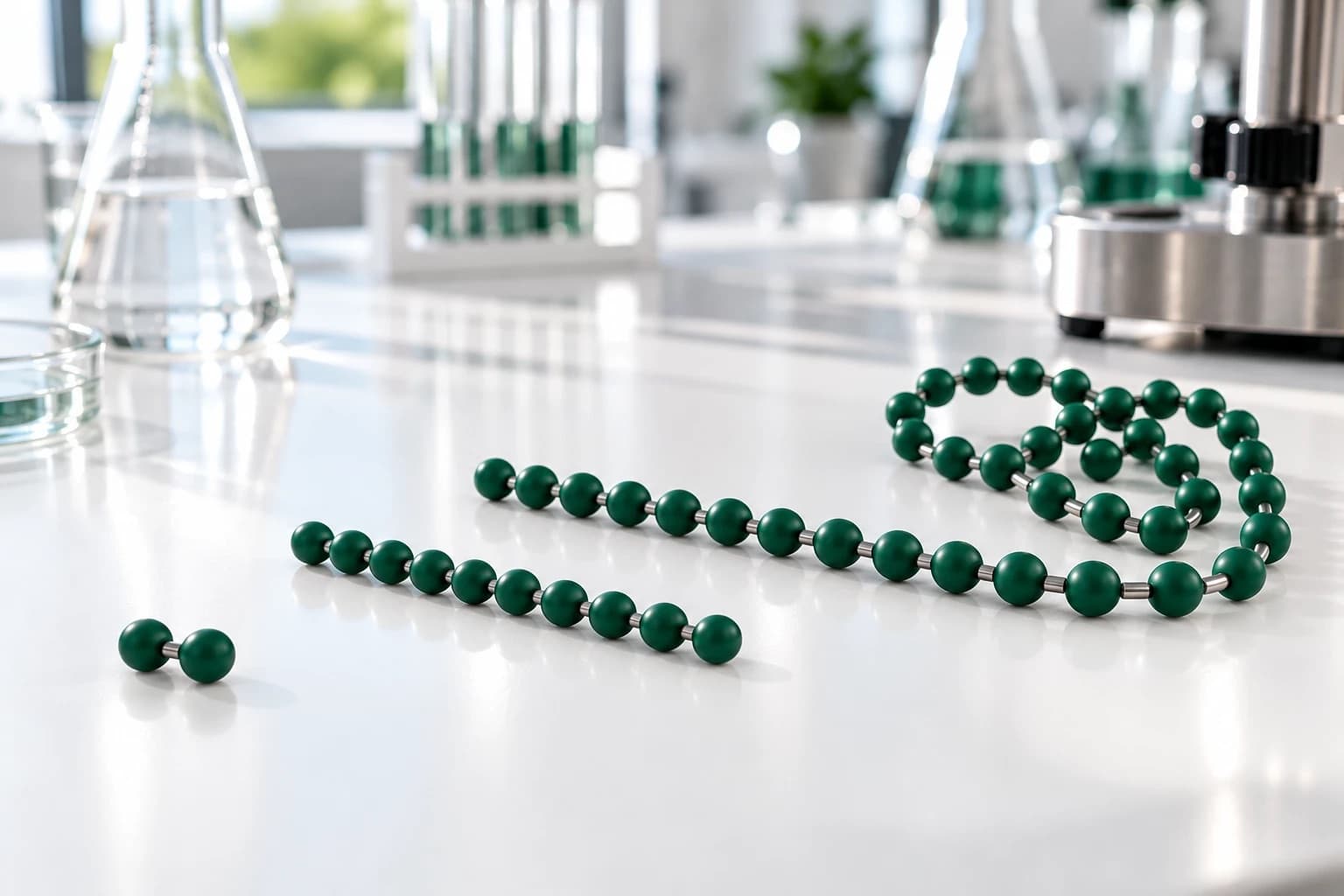 Education
What Is a Peptide? Amino Acids, Peptides and Proteins Explained
Amino acids, peptides and proteins aren't three kinds of molecule. They're the same building blocks at different lengths, and the line between them is a convention.
Dr. Sufia Ul Haque · 5 min readRead Education
What Is a Peptide Bond?
A peptide bond joins one amino acid to the next. It has partial double-bond character, which makes it flatter and less flexible than it first appears.
Dr. Sufia Ul Haque · 6 min readRead
Ready to Purchase Research Peptides?
Join US researchers who trust Pure Peptides for independently verified, research-grade compounds. Create a free account to track orders and download COA documents instantly.