
GHK-Cu (Copper Peptide) Research Peptide
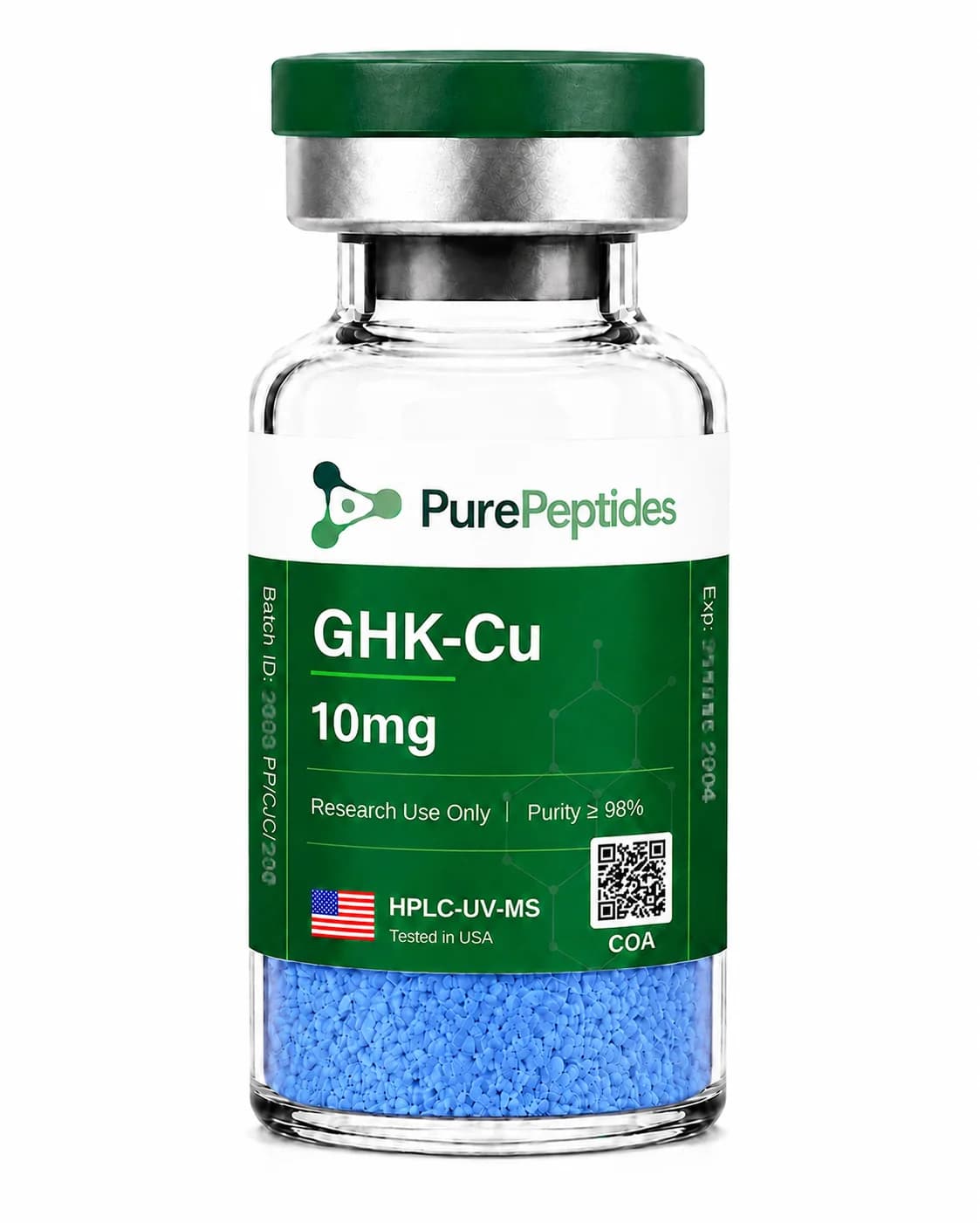
GHK-Cu is three amino acids joined together, glycine then histidine then lysine, holding a single copper ion.
- Purity
- >99%
- Dispatch
- Dispatched next business day with cold-chain delivery
- Cold chain
- Temperature-controlled packaging from lab to door
- Certificate
- Batch-specific Certificate of Analysis available on this page
Multi-vial Discount Available
Select Size
Ships Next Day
Orders confirmed before 12pm EST ship the same business day; orders after 12pm EST ship the next business day. Monday to Friday.
Quality Guaranteed
Every batch is HPLC-tested to >99% purity. Certificate of Analysis available on this page; MSDS available on request.
Verify Batch
Lot-level COA, Batch DF/GHK/062026. Check the batch number printed on your vial against the certificate below, which reports the tests run on it.
What is GHK-Cu (Copper Peptide)?
GHK-Cu is three amino acids joined together, glycine then histidine then lysine, holding a single copper ion. The three amino acids on their own are called GHK; add the copper and it becomes GHK-Cu, and the two are different substances that do not always behave the same way. The tripeptide was first found in human blood plasma. Research on it has centered on skin cells and the material they build around themselves, and on lung tissue in animals.
Technical Specs
Labeled quantity is net peptide content, not gross salt weight.
GHK-Cu (Copper Peptide) Research & Reference
What GHK-Cu (Copper Peptide) does in published studies, and how to work with it in the laboratory, are covered in full on two dedicated pages rather than summarised here, so neither the evidence nor the handling detail is cut short.
Certificates of Analysis
Every batch is tested by an independent laboratory before release. The certificate covering this batch of GHK-Cu (Copper Peptide), and its safety data sheet, are below as PDFs, so the figures on this page can be checked against the source.
Frequently Asked Questions
Is GHK-Cu (Copper Peptide) independently tested for purity?+−
Yes. Every batch of GHK-Cu (Copper Peptide) is tested by an independent third-party laboratory using HPLC and MS-UPLC, confirming purity and mass identity before the batch is released. Pure Peptides does not test its own material.
Can I see the Certificate of Analysis before buying?+−
Yes. The Certificate of Analysis for the batch currently in stock can be viewed and downloaded directly on this page, before you place an order. Each certificate states the batch number, the measured purity, and the date of analysis, and can be verified independently with the issuing laboratory using the report number it carries.
What does "Research Use Only" mean?+−
It means GHK-Cu (Copper Peptide) is supplied for in-vitro laboratory research and for no other purpose, and must not be administered to humans or animals. GHK-Cu is legal to purchase in the United States for in vitro and non-clinical laboratory research. It has no FDA approval and no approved human use. GHK-Cu is not a scheduled substance under the Controlled Substances Act. Sold strictly for qualified research use, not human or veterinary administration.
How is GHK-Cu (Copper Peptide) shipped and stored?+−
GHK-Cu (Copper Peptide) ships from US stock with cold-chain packaging and full tracking; orders placed before noon EST on business days are typically dispatched the same business day. On arrival, store the lyophilized powder at -20°C or below, dry and protected from light.
What is the difference between GHK and GHK-Cu?+−
GHK is the tripeptide on its own, glycine-histidine-lysine, weighing 340.38 g/mol. GHK-Cu is that tripeptide holding a copper ion, weighing 402.92 g/mol. This product is the copper complex. The two are not interchangeable in the published work: one study found the copper complex and copper ions alone both raised an enzyme in cultured skin cells while the tripeptide without copper did not, and another study of copper-free GHK concluded it behaved much like the copper form on a different measure. The Published Research tab names which form each cited study used.
Is GHK-Cu the same as PAL-GHK or Matrixyl?+−
No. Those are palmitoylated derivatives of the same tripeptide, sold separately. Adding a fatty acid chain changes the molecule, and research on one is not research on another. Each product page cites only work done on the compound it sells.
From the blog
Background and context on this compound.
Related Compounds
 >99%
>99% >99%
>99% >99%
>99% >99%
>99% >99%
>99% >99%
>99% >99%
>99% >99%
>99%