

Orexin-A Was Discovered Twice in the Same Year, and Neither Name Won
Orexin-A was found by two research groups in the same year, each with its own name for it. Both names are still in use, even inside the same body of work.
September 19, 2026
Shop by category
Growth Hormone Axis ResearchRegeneration ResearchPeptide BioregulatorsCognitive & Neuropeptide ResearchMetabolic & Cellular ResearchGLP-1 & Incretin ResearchMelanocortin & Endocrine ResearchDermal Peptide ResearchImmune & Thymic ResearchPeptide BlendsLab SuppliesResearch & info
Research HubReference LibraryEducationCompareBlogCOAsWhy UsFAQCalculatorGlossary
Nootropic peptides and neuropeptides for cognitive and neurological pathway research, including Semax, Selank and Dihexa.
 >99%
 >99%
 >99%
 >99%
 >99%
 >99%
 >99%
 >99%
 >99%
 >99%
 >99%
 >99%
About this category
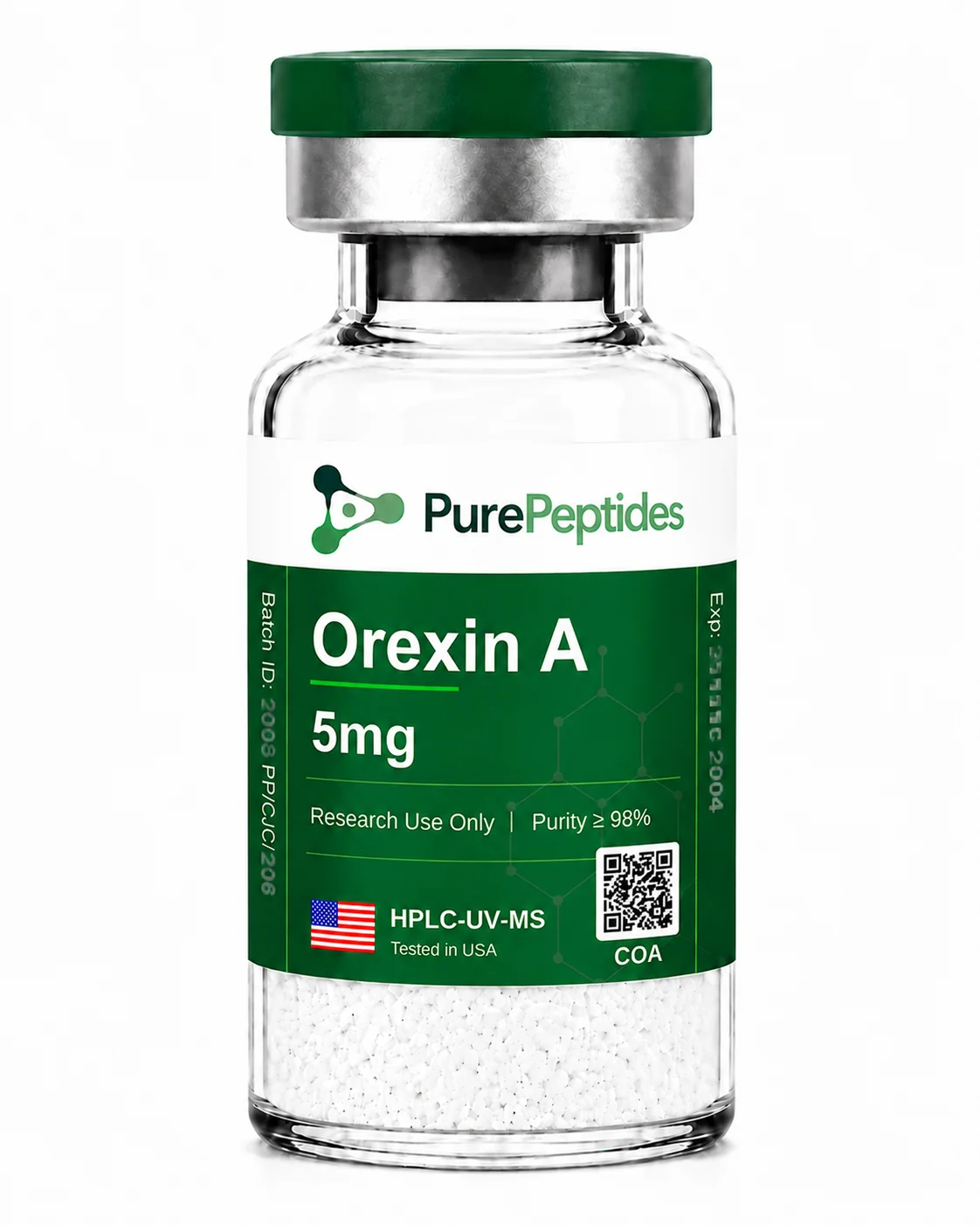
Peptides in this category are studied for their effects on neurotrophic signaling, neurotransmitter systems, and synaptic plasticity. Semax, developed at Russia's Institute of Molecular Genetics, copies four residues of ACTH and adds three more to slow its breakdown; it lacks ACTH's hormonal activity but is researched for its influence on BDNF and NGF expression. Selank, an analog of the immunomodulatory peptide tuftsin, is studied for anxiolytic-like effects thought to run through GABAergic and monoamine pathways rather than benzodiazepine receptors. Dihexa, derived from angiotensin IV, is studied in preclinical hippocampal models; its proposed mechanism, activation of the HGF/c-Met receptor system, rests mainly on work from the laboratory that developed it. Orexin A and Orexin B, produced in the lateral hypothalamus, are studied for their role in arousal, wakefulness, and appetite regulation.
Research and reference
An evidence review and a handling reference for each compound, kept off the product pages so neither is cut short.
Family overviewNeuropeptides Research
Semax ResearchSemax ReferenceSelank ResearchSelank ReferenceDihexa ResearchDihexa ReferenceP21 (P021) ResearchP21 (P021) ReferenceDNSP-11 ResearchDNSP-11 ReferencePE-22-28 ResearchPE-22-28 ReferenceADAMAX ResearchADAMAX ReferenceCerebrolysin ResearchCerebrolysin ReferenceColivelin ResearchColivelin ReferenceHumanin ResearchHumanin ReferenceDSIP (Delta Sleep-Inducing Peptide) ResearchDSIP (Delta Sleep-Inducing Peptide) ReferenceOrexin A ResearchOrexin A ReferenceOrexin B ResearchOrexin B ReferenceFrom the blog
Orexin-A was found by two research groups in the same year, each with its own name for it. Both names are still in use, even inside the same body of work.

Mitochondria read the genetic code slightly differently from the rest of the cell. For humanin that means two peptides of different lengths, from one gene.
Selank is tuftsin, a fragment of an antibody, with three amino acids added at one end for a single stated purpose: to stop it degrading before it can act.

A cell trims its proteins and discards the offcuts. DNSP-11 is eleven amino acids from one of those offcuts, and whether a living body makes it is an open question.
Research areas