
- Purity
- >99%
- Verified
- Independent HPLC purity verification on every batch
- Cold chain
- Temperature-controlled packaging from lab to door
- Certificate
- Certificate of Analysis available on request for this batch
Multi-vial Discount Available
Get notified when this batch is released
Enter your email and we'll let you know as soon as this product is available again.
Next batch coming soon
This compound is temporarily out of stock. Check back soon or contact us for a restock estimate.
Quality Guaranteed
Every batch is HPLC-tested to >99% purity. Certificate of Analysis available on request; MSDS available on request.
Certificate of Analysis Available on Request
Request this batch's certificate using your order number.
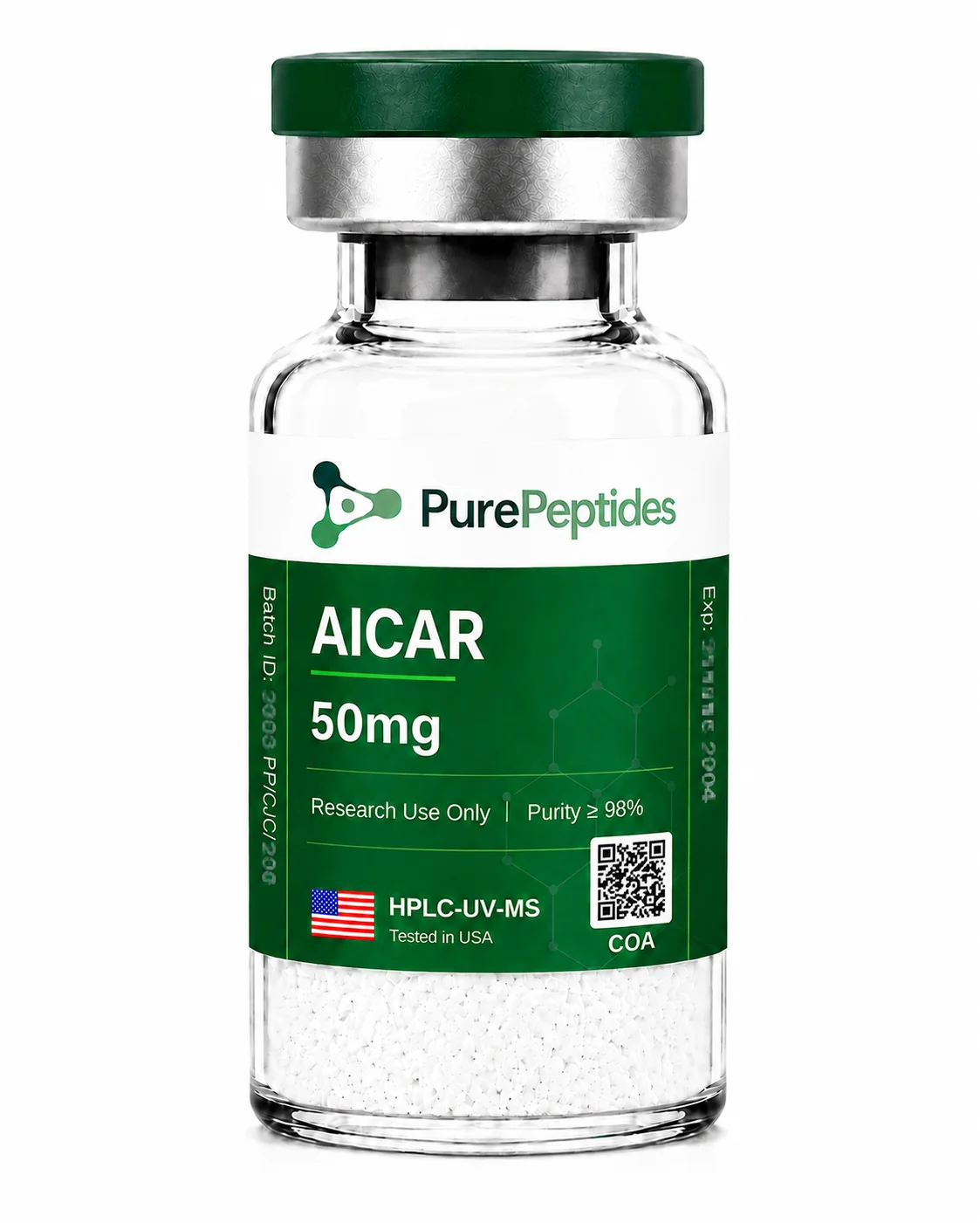
What is AICAR?
AICAR is a nucleoside, not a peptide. It is a sugar joined to a nitrogen-containing ring. It occurs naturally as an intermediate in the pathway cells use to build purines, the components of DNA and RNA, and under the name acadesine it has been studied as a drug since the 1990s. Once inside a cell it is converted into a phosphate-carrying form called ZMP, which resembles AMP closely enough to switch on AMP-activated protein kinase, or AMPK, the enzyme that responds when a cell's energy runs low. Research on it covers energy metabolism in muscle and liver, endurance in mice, and the ways it acts on cells with and without AMPK.
Technical Specs
Labeled quantity is net peptide content, not gross salt weight.
AICAR Research & Reference
What AICAR does in published studies, and how to work with it in the laboratory, are covered in full on two dedicated pages rather than summarised here, so neither the evidence nor the handling detail is cut short.
Safety Data Sheet
The safety data sheet for AICAR is below as a PDF, in the 16-section GHS format covering identification, hazards, handling, storage and disposal.
Frequently Asked Questions
Is AICAR independently tested for purity?+−
Yes. Every batch of AICAR is tested by an independent third-party laboratory using HPLC and MS-UPLC, confirming purity and mass identity before the batch is released. Pure Peptides does not test its own material.
What does "Research Use Only" mean?+−
It means AICAR is supplied for in-vitro laboratory research and for no other purpose, and must not be administered to humans or animals.
How is AICAR shipped and stored?+−
AICAR ships from US stock with cold-chain packaging and full tracking; orders placed before noon EST on business days are typically dispatched the same business day. On arrival, store the lyophilized powder at -20°C or below, dry and protected from light.
Related Compounds
 >99%
>99% >99%
>99% >99%
>99% >99%
>99% >99%
>99% >99%
>99% >99%
>99% >99%
>99%