
KLOW Research Blend
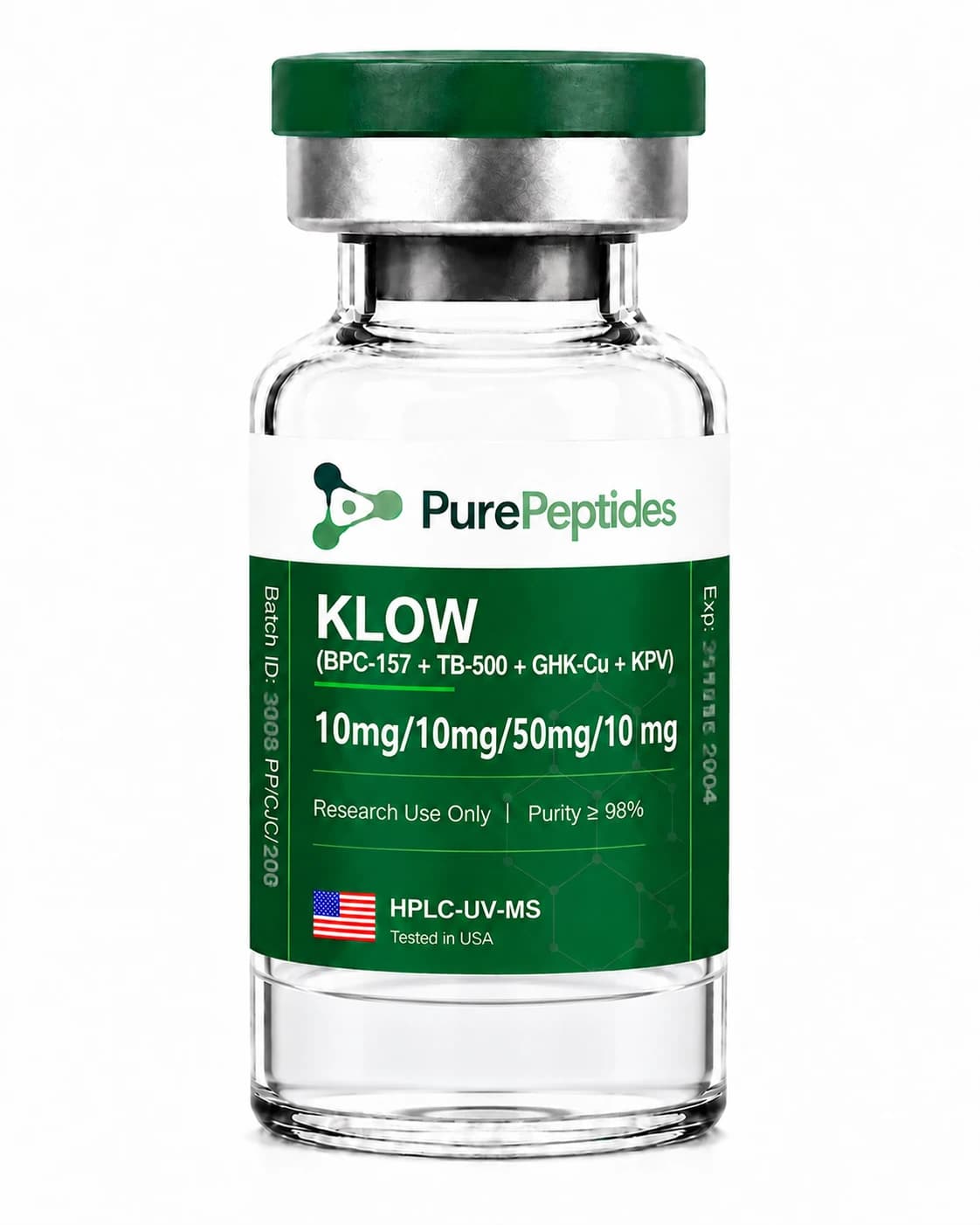
The KLOW peptide blend holds 10 mg of BPC-157, 10 mg of TB-500, 50 mg of GHK-Cu and 10 mg of KPV, freeze-dried together in one vial.
Multi-vial Discount Available
Select Size
Research Use Only · Not for human or veterinary consumption.
People also purchased
5mg · $43.00
5mg · $29.00
500mg · $48.00
Certificates of Analysis
Every batch is tested by an independent laboratory before release.
Verify Batch. Lot-level COA, Batch PP/KLOW/112026. Check the batch number printed on your vial against the certificate below, which reports the tests run on it.
- Ships Next DayOrders confirmed before 12pm EST ship the same business day; orders after 12pm EST ship the next business day. Monday to Friday.
- Quality GuaranteedEvery batch is HPLC-tested to >99% purity. Certificate of Analysis available on this page; MSDS available on request.
- Cold-Chain ShippingTemperature-controlled packaging from lab to door: thermal insulation and ice packs on every order, at no extra cost.
- Free US Shipping Over $150Standard US shipping is free on orders over $150. It goes by USPS Priority Mail, tracked, with a 2 to 3 business day delivery aim.
What is KLOW Blend?
The KLOW peptide blend holds 10 mg of BPC-157, 10 mg of TB-500, 50 mg of GHK-Cu and 10 mg of KPV, freeze-dried together in one vial. BPC-157 is a synthetic peptide made of 15 amino acids. TB-500 is a synthetic peptide made of seven amino acids, carrying a chemical cap known as an acetyl group. GHK-Cu is three amino acids joined together, glycine then histidine then lysine, holding a single copper ion. KPV is three amino acids joined together: lysine, proline and valine. No published study has tested this blend as supplied. Each peptide has its own research article, BPC-157 Research, TB-500 Research, GHK-Cu Research and KPV Research, covering what has been published on it alone.

Product information reviewed by Dr. Martina Rossi, PhD
Scientific Contributor and Reviewer · Reviewed
In each vial
80 mgin total
- BPC-15710 mg
CAS 137525-51-0 · 1,419.55 g/mol
- TB-50010 mg
CAS 885340-08-9 · 889.02 g/mol
CAS 89030-95-5 · 401.91 g/mol
- KPV10 mg
CAS 67727-97-3 · 342.44 g/mol
Lyophilized together in one vial. Each component's own research article and reference page cover what has been published on it alone and how to work with it in the laboratory.
Technical Specs
KLOW Blend Batch Results
Batch PP/KLOW/112026
- Laboratory
- Freedom Diagnostics
- Certified
- November 8, 2026
- Sample
- 80 mg vial
- Report
- Pure2611044073
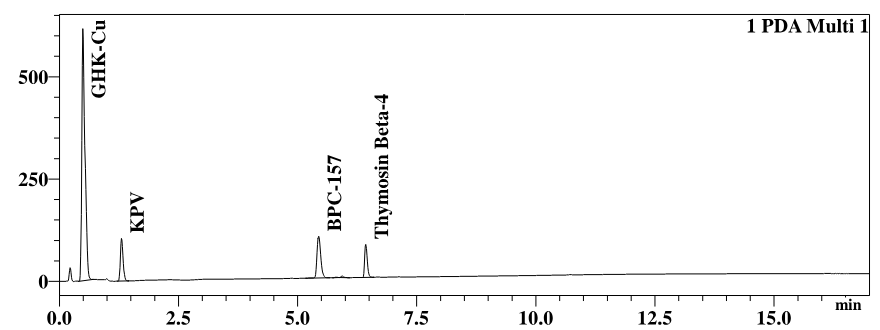
An independent laboratory, Freedom Diagnostics, tested a sample from this batch. These are the results on its certificate.
Purity
Pass99.55%
HPLC-UV
Identity
PassConfirmed
LC-MS
Purity is an HPLC figure: the main peak’s share of everything the detector recorded at one wavelength. It’s not a weight. What a purity figure counts →
Check it with the lab. Freedom Diagnostics publishes each certificate on its own site under the search code printed on it. Product, batch, date and results should match this page.
Chromatogram
HPLC-UV
Mass spectrum
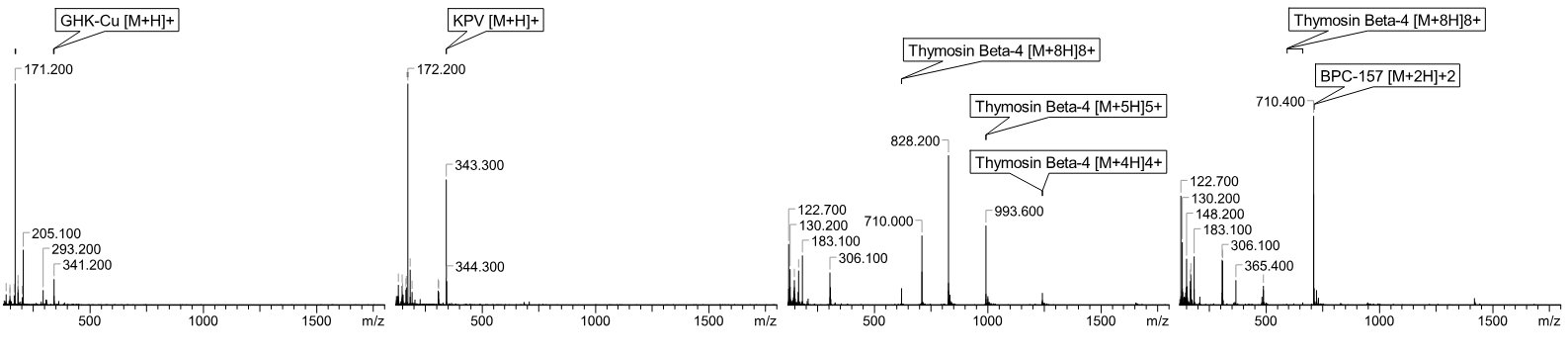
The LC-MS identity check: the labelled peaks are the ions the lab matched to KLOW Blend. What a mass spectrum shows →
Frequently Asked Questions
Is KLOW Blend third-party tested for purity?+−
Yes. Every batch of KLOW Blend is tested by an independent third-party laboratory using HPLC and MS-UPLC, confirming purity and mass identity before the batch is released. Pure Peptides does not test its own material.
Can I see the Certificate of Analysis before buying?+−
Yes. The Certificate of Analysis for the batch currently in stock can be viewed and downloaded directly on this page, before you place an order. Each certificate states the batch number, the measured purity, and the date of analysis, and can be verified independently with the issuing laboratory using the report number it carries.
What does "Research Use Only" mean?+−
It means KLOW Blend is supplied for in-vitro laboratory research and for no other purpose, and must not be administered to humans or animals. Purchasing it for in-vitro research is lawful in the United States, and it is not a controlled substance, but purchasers are responsible for ensuring their own use complies with applicable federal, state, and local regulations.
How is KLOW Blend shipped and stored?+−
KLOW Blend ships from US stock with cold-chain packaging and full tracking; orders placed before noon EST on business days are typically dispatched the same business day. On arrival, store the lyophilized powder at -20°C or below, dry and protected from light.
How should KLOW Blend be stored?+−
Store the lyophilized vial at -20°C or below in a dry, dark environment. Once reconstituted for in-vitro use, prepare only the volume your assay requires, and avoid repeated freezing and thawing.
How is KLOW Blend reconstituted for in-vitro research?+−
For in-vitro research, the blend is reconstituted with a laboratory-appropriate diluent, preparing only the volume your assay requires. GHK-Cu is a copper complex, so the cautions on the GHK-Cu Reference page about strong chelating agents and phosphate buffers apply to the whole vial. Pure Peptides cannot advise on administration or research methods; every compound is supplied for in-vitro laboratory use only. Try the Reconstitution Calculator →
Have these four been studied together?+−
No published study has tested all four together. One study in rats gave BPC-157 and TB-500 together, and its authors reported that the combination "did not confer additional benefits compared to either agent alone". That study describes its TB-500 as synthetic thymosin beta-4 and gives no sequence.
Why does the vial hold 50 mg of GHK-Cu?+−
The vial contains 10 mg each of BPC-157, TB-500 and KPV and 50 mg of GHK-Cu. These amounts are the blend's specification: they state what is in the vial, not a recommendation or a ratio for use.
Which handling notes apply to the whole vial?+−
GHK-Cu is a copper complex, so the cautions on its Learn page about strong chelating agents and phosphate buffers apply to the whole vial, not only to the GHK-Cu in it. The GHK-Cu Reference page sets those cautions out.
Compare KLOW Blend
A side-by-side page that tells KLOW Blend apart from another compound: how the two relate, which molecule the published evidence used, and whether they have been compared directly.
Peptide Blends
Related Compounds
 >99%
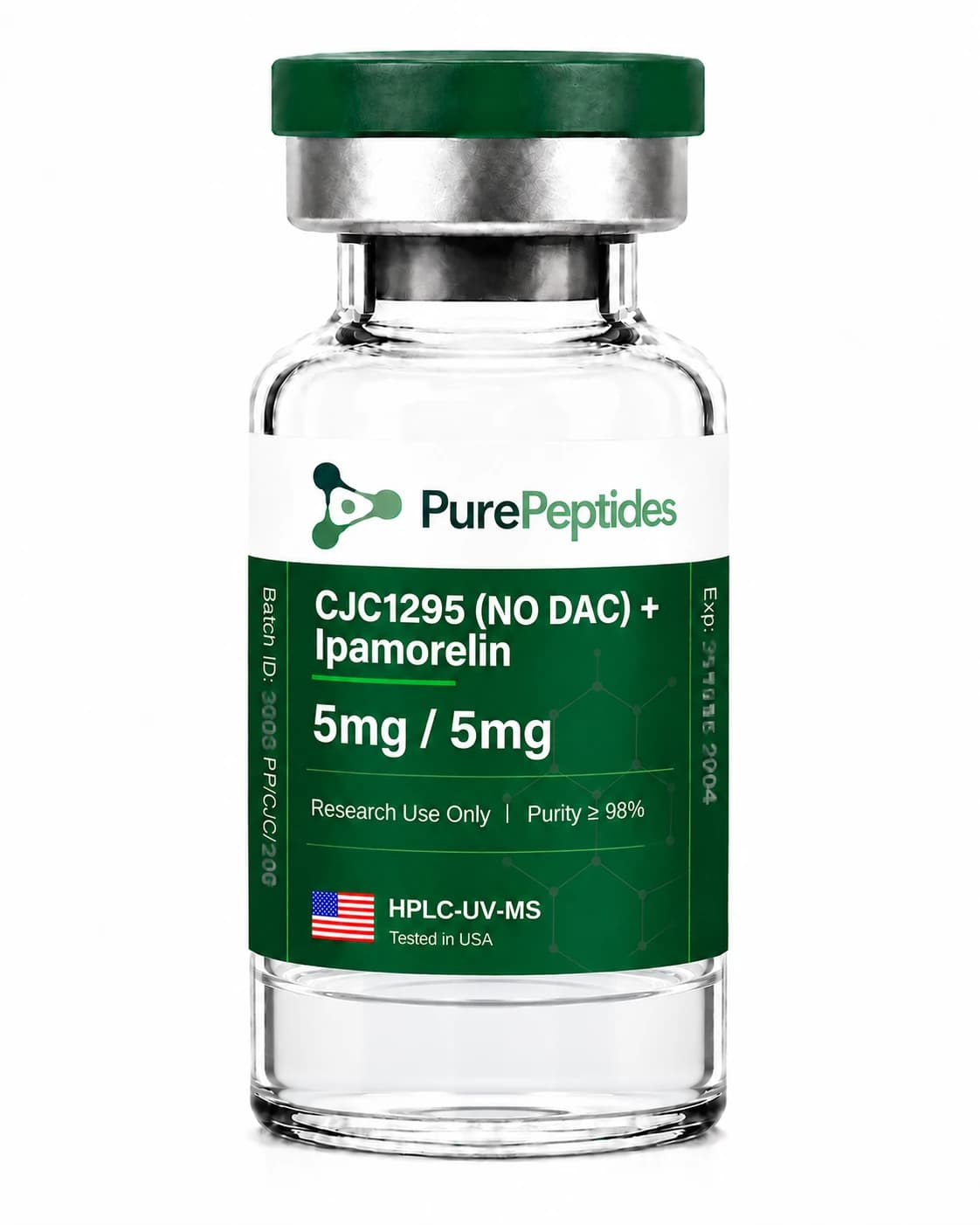
CJC-1295 (No DAC) + Ipamorelin Blend
Two peptides in one vial: CJC-1295 (No DAC) and Ipamorelin, 5 mg each.
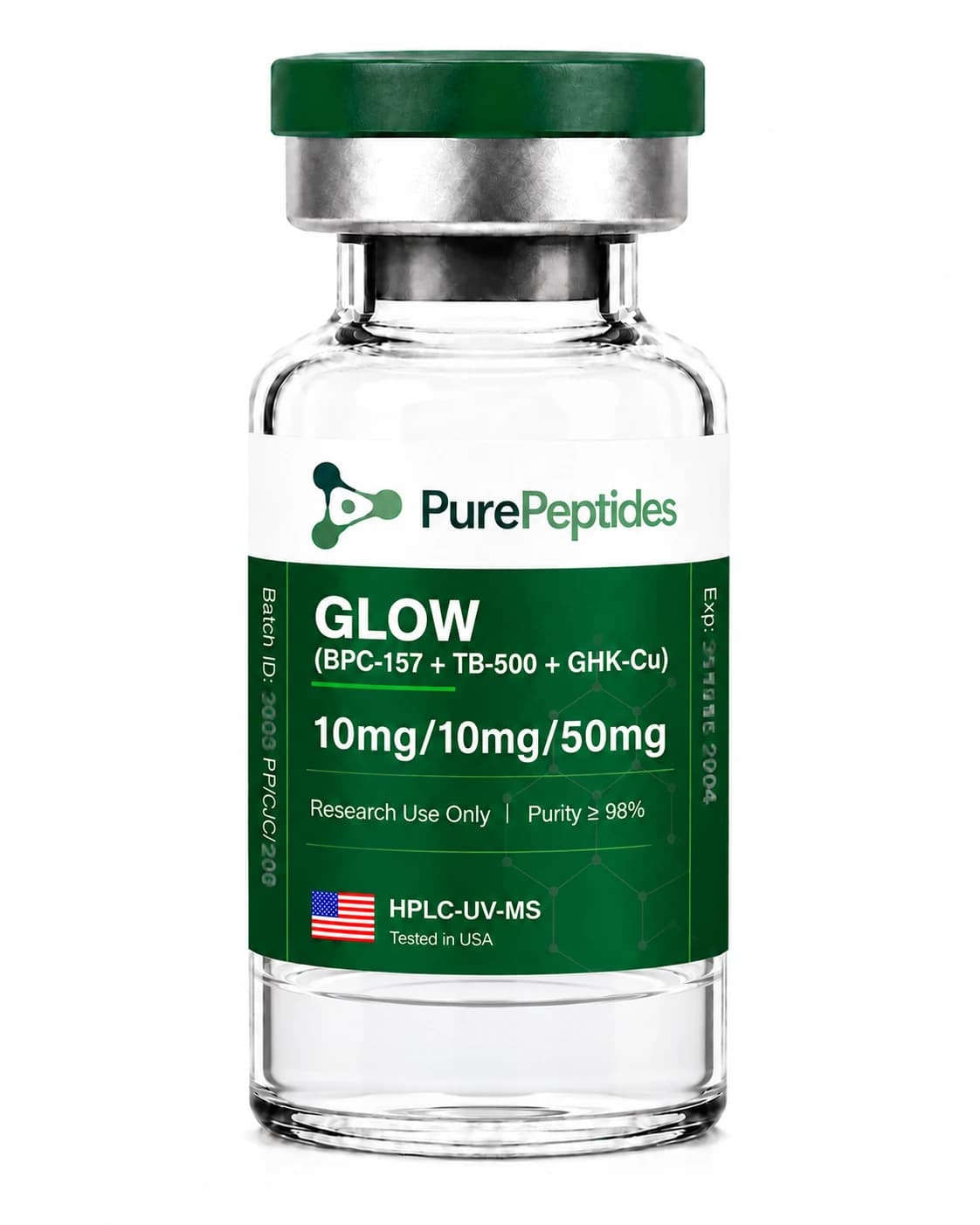 >99%
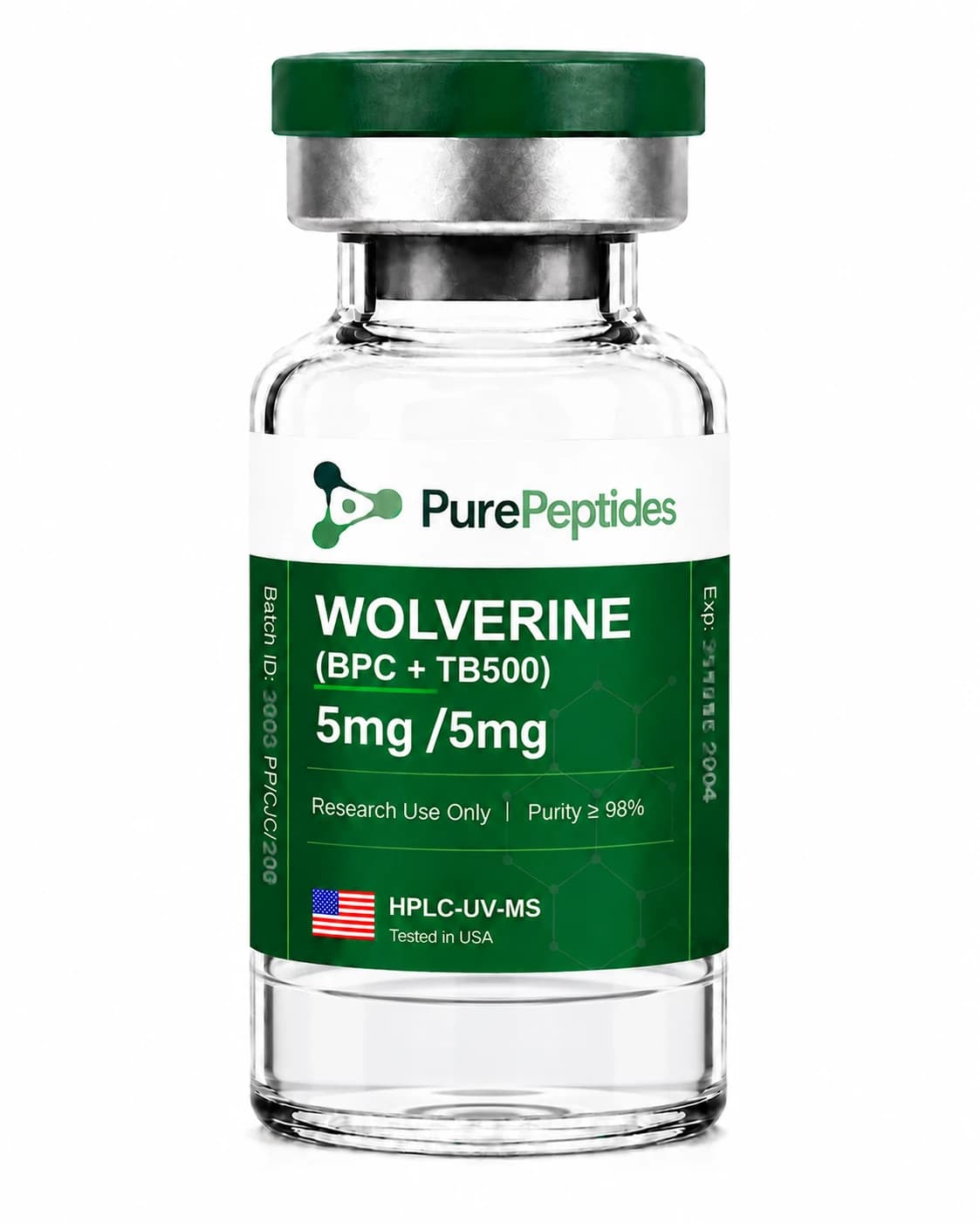 >99%
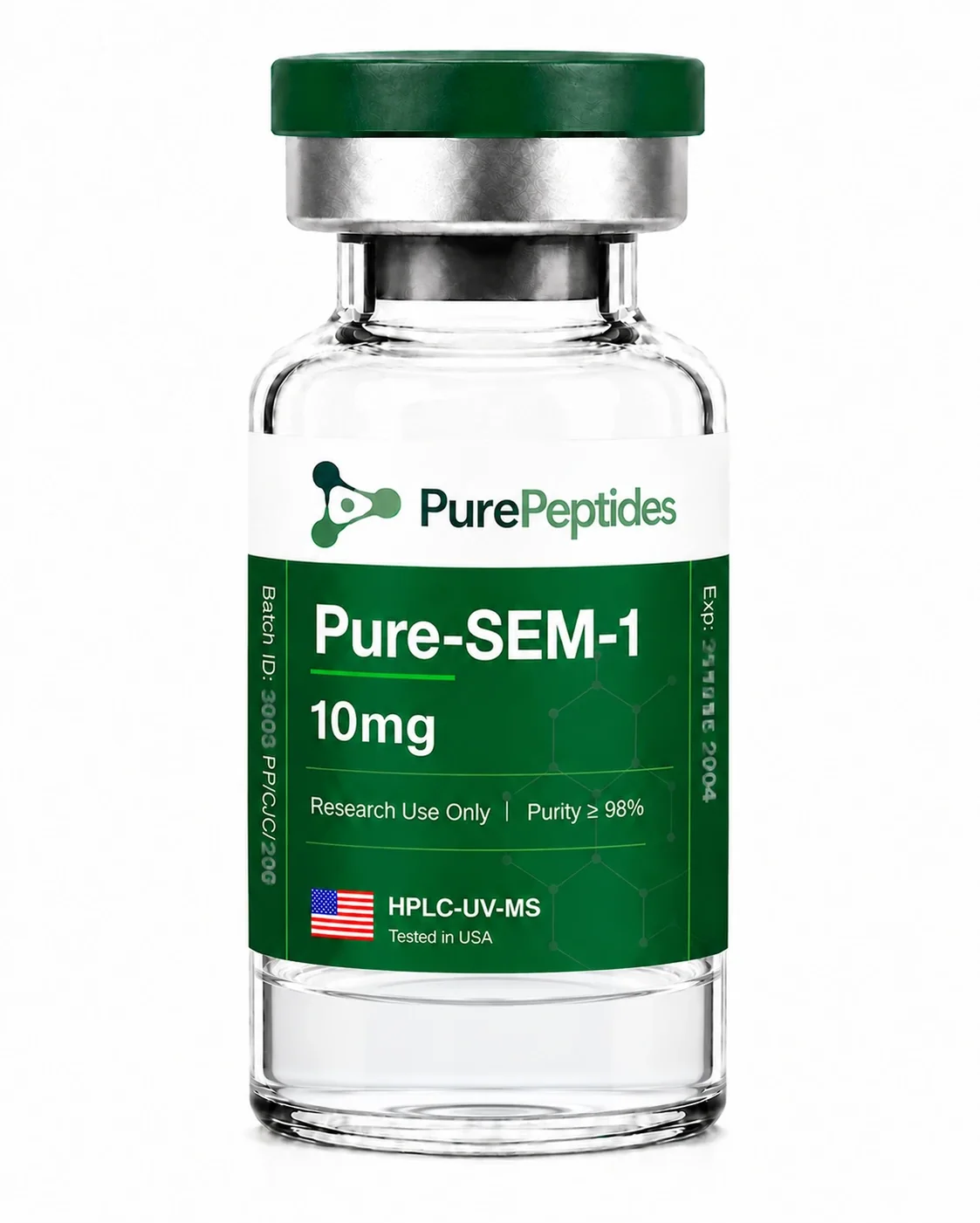 99%

Reviewed for scientific accuracy
Dr. Martina Rossi, PhD
PhD, Université Grenoble Alpes · Scientific Contributor and Reviewer
Dr. Rossi's doctoral research at Université Grenoble Alpes examined the vascular functions of bone morphogenetic proteins. Her peer-reviewed work spans cell and molecular biology, vascular biology, and gene therapy, in journals including Cardiovascular Research, Scientific Reports, and Brain Sciences. She reviews Pure Peptides' product, reference, and research pages for scientific accuracy against the sources they cite.