
PTD-DBM Research Peptide
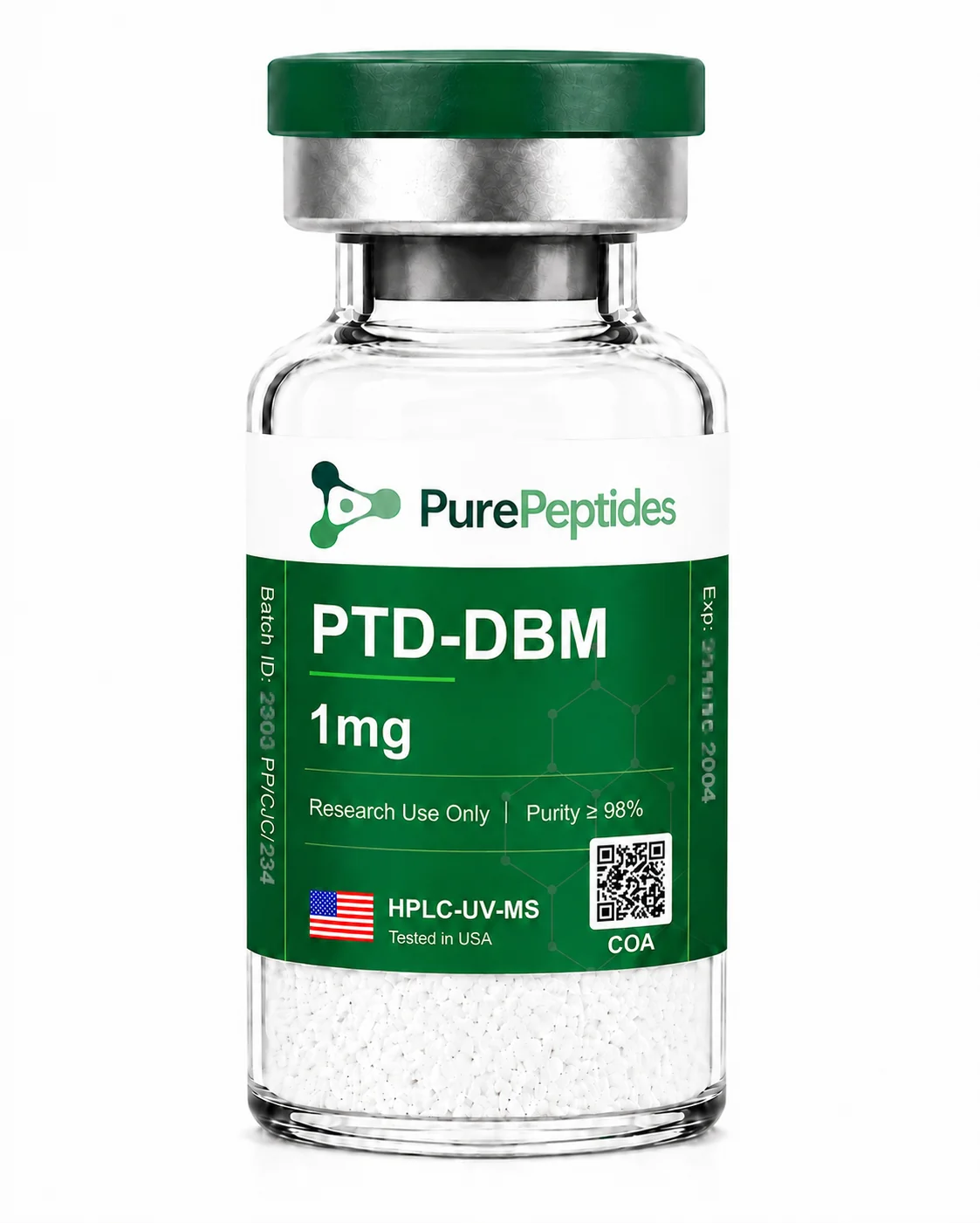
PTD-DBM is one molecule made of two joined parts, and its name abbreviates both.
- Purity
- >99%
- Dispatch
- Dispatched next business day with cold-chain delivery
- Cold chain
- Temperature-controlled packaging from lab to door
- Certificate
- Certificate of Analysis available on request for this batch
Multi-vial Discount Available
Select Size
Ships Next Day
Orders confirmed before 12pm EST ship the same business day; orders after 12pm EST ship the next business day. Monday to Friday.
Quality Guaranteed
Every batch is HPLC-tested to >99% purity. Certificate of Analysis available on request; MSDS available on request.
Certificate of Analysis Available on Request
Request this batch's certificate using your order number.
What is PTD-DBM?
PTD-DBM is one molecule made of two joined parts, and its name abbreviates both. The first is a protein transduction domain. Its job is to carry the rest of the molecule across a cell membrane. The second is a Dishevelled-binding motif. That is a fragment copied from a protein called CXXC5, at the point where CXXC5 grips a second protein called Dishevelled. The design idea is that the copy competes for that grip, so CXXC5 cannot hold on. CXXC5 has a research literature far larger than this peptide's, and the two are kept separate throughout this page.
Technical Specs
Labeled quantity is net peptide content, not gross salt weight.
PTD-DBM Research & Reference
What PTD-DBM does in published studies, and how to work with it in the laboratory, are covered in full on two dedicated pages rather than summarised here, so neither the evidence nor the handling detail is cut short.
Safety Data Sheet
The safety data sheet for PTD-DBM is below as a PDF, in the 16-section GHS format covering identification, hazards, handling, storage and disposal.
Frequently Asked Questions
Is PTD-DBM independently tested for purity?+−
Yes. Every batch of PTD-DBM is tested by an independent third-party laboratory using HPLC and MS-UPLC, confirming purity and mass identity before the batch is released. Pure Peptides does not test its own material.
What does "Research Use Only" mean?+−
It means PTD-DBM is supplied for in-vitro laboratory research and for no other purpose, and must not be administered to humans or animals. PTD-DBM is legal to purchase in the United States for in vitro and non-clinical laboratory research. It has no FDA approval and no approved human use. No approved product containing this peptide was located, and no human study of it was located either. PTD-DBM is not a scheduled substance under the Controlled Substances Act. Sold strictly for qualified research use, not human or veterinary administration.
How is PTD-DBM shipped and stored?+−
PTD-DBM ships from US stock with cold-chain packaging and full tracking; orders placed before noon EST on business days are typically dispatched the same business day. On arrival, store the lyophilized powder at -20°C or below, dry and protected from light.
What do the two halves of the name mean?+−
PTD is a protein transduction domain, a short sequence whose function is to carry the rest of the molecule across a cell membrane. DBM is a Dishevelled-binding motif, a fragment copied from the protein CXXC5 at the point where CXXC5 binds a protein called Dishevelled. Joined together, the design intent is that the copied fragment competes for that binding site.
How large is the published literature on PTD-DBM?+−
Very small. A PubMed search for the compound's name returns four records. All the primary work comes from a single research group. A search for the protein it targets, CXXC5, returns roughly 133 records, but that is a literature about the protein rather than about this peptide. The Published Research tab names, for each cited study, whether the peptide was given on its own or alongside a second compound.
Was the peptide ever tested on its own?+−
In cell culture, yes: it disrupted the CXXC5-Dishevelled interaction and raised beta-catenin and collagen production. In living animals, once. A 2023 study reported that PTD-DBM alone reversed the suppression of new hair-follicle formation caused by a prostaglandin. The other animal results were produced with valproic acid alongside it, or with the arms not reported separately.
Related Compounds
 >99%
>99% >99%
>99% >99%
>99% >99%
>99% >99%
>99% >99%
>99% >99%
>99% >99%
>99%